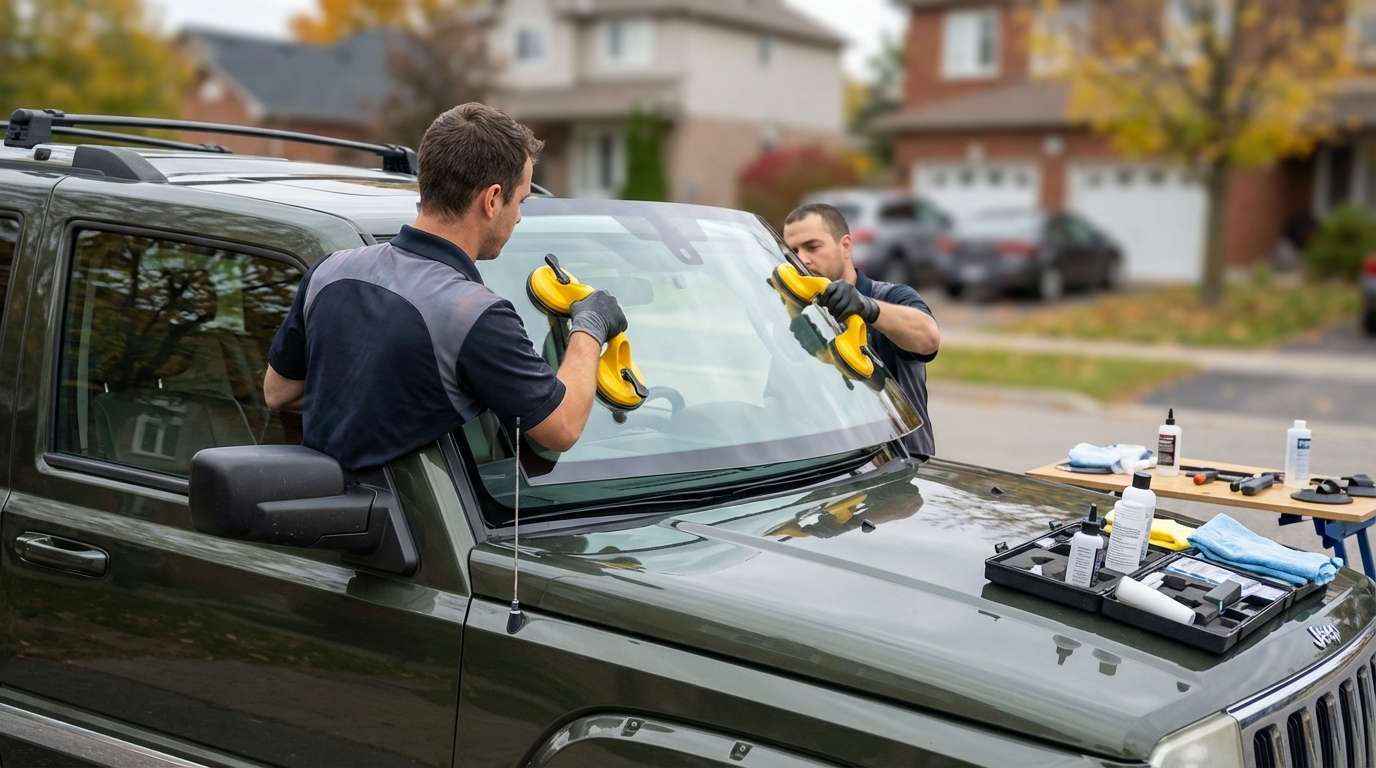
Upright Glass Angles and Commander Windshield Variations
Because the windshield on this SUV sits at an unusually steep, upright pitch, incoming highway gravel strikes the glass head-on rather than glancing off. That boxy front profile leads to frequent star breaks and edge cracks that spread fast across the viewing area. When matching a replacement, the primary distinction comes down to whether your rearview mirror housing contains an automatic moisture detector.
The standard solar-tinted glass without automated wipers runs under NAGS part number DW01628. If your vehicle includes the factory automatic wiper option, it requires DW01629, which comes pre-equipped with the rain/light sensor bracket bonded behind the rearview mirror. You will not find modern camera systems or heated wiper grids embedded in this glass, keeping the hardware simple. For every replacement I do, I supply aftermarket glass manufactured by proven brands like Pilkington, FYG, PGW, or XYG rather than dealership Mopar units.
Managing Exterior Mouldings and High-Speed Cab Whistles
A frequent complaint on these rigs is an ear-piercing whistle along the roofline at 100 km/h. This noise almost always traces back to lifting, hardening, or misalignment of the upper reveal moulding, which was originally cataloged under Mopar part number 55369035AC. If that top rubber strip sits even a fraction of a millimetre proud of the roofline, turbulent air gets underneath it and vibrates the lip against the steel.
Down lower, the two-piece plastic cowl panel guarding the wiper linkages and washer hoses presents its own quirks. Over years of heat cycles, the plastic cowl warps away from the glass. If the retainers lose tension, the plastic vibrates directly against the bottom edge of the glass, creating a persistent buzzing sound inside the cabin. Getting the A-pillar exterior trim and the cowl aligned flush during reassembly is essential to keeping the vehicle quiet on the highway.
Water Tracking: Sunroof Tubes Versus Pinchweld Seals
When water drips from the interior A-pillar assist handles or pools in the front footwells, the windshield seal is usually the first suspect, but it is rarely the culprit. Models equipped with the CommandView multi-panel roof—which pairs a power front sunroof with two fixed glass panels over the second-row seats—have front drainage tubes routed right past the pillar grab handles. When debris clogs these lines, water overflows the cassette and tracks down the interior trim, mimicking a massive glue-line failure.
Do I need to replace my rain sensor when changing the windshield?
The sensor module itself is reused, but the clear optical silicone gel pad between the sensor face and the glass must be renewed. If an old, clouded, or air-bubbled pad is reinstalled on the DW01629 bracket, the optical refraction fails and the automatic wipers will either run continuously or fail to activate in heavy rain.
Why did the A-pillar grab handle leak right after a heavy rain?
The grab handles are bolted straight through the interior pillar trim near the path of the sunroof drain hoses. If your front drain lines are detached, cracked, or backed up with pine needles, water routes down the internal sheet metal and exits directly through the bolt cavities of the assist handle rather than coming through the windshield urethane.
Can I install the DW01628 bare glass if my original had a rain sensor?
The bare glass lacks the structural mounting bracket bonded at the factory to hold the sensor against the glass at the correct optical angle. While the glass physically fits the opening, your automatic wipers and automatic headlight features will be disabled unless you purchase the DW01629 intended for that setup.


