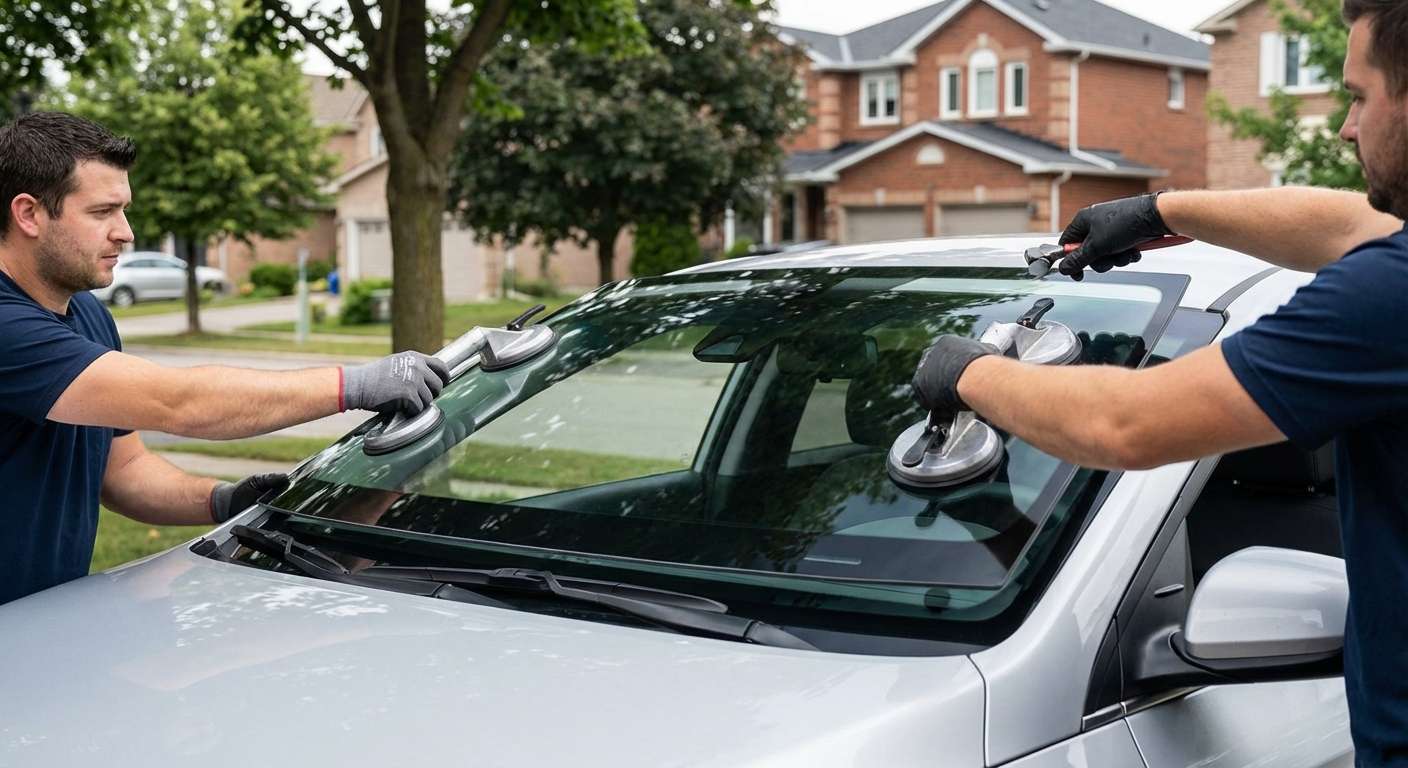
Identifying Your Windshield Hardware Options
To order the correct glass for this liftback, you have to look directly through the black ceramic frit surrounding your rearview mirror. Hyundai manufactured this aerodynamic body across hybrid, plug-in hybrid, and fully electric drivetrains with two primary windshield configurations, and mixing them up means your driver assist systems or automatic accessories will not mount back into place.
The easiest tell is your forward-facing camera. If your car features Lane Keeping Assist, Lane Departure Warning, or Forward Collision-Avoidance Assist, your windshield has a trapezoidal opening in the black border with a structural mounting bracket bonded directly to the inner layer of the glass. Vehicles without these safety packages feature a smooth, solid frit band behind the mirror mount. Do not confuse this vehicle with the later Ioniq 5 crossover; this first-iteration liftback uses an entirely different, steeper glass rake that relies on bottom alignment stoppers (part 87114-3K000) hidden under the plastic cowl.
| Glass Variant | OEM Reference | Key Visible Features |
|---|---|---|
| Standard Base | 86111-G2240 | Solid mirror frit, no camera cutout, standard humidity sensor pad |
| ADAS Equipped | 86111-G2250 | Trapezoidal bracket for forward-facing safety camera, rain sensor option |
Beyond the forward-facing camera, you must verify what sits directly against the glass beneath the mirror bracket. Higher trim packages like the Limited often bundle an automatic rain sensor along with the standard cabin auto-defog humidity sensor. The original glass was constructed with solar-control laminate engineered to block infrared heat load, reducing the auxiliary draw on the high-voltage traction battery by easing the air conditioning load.
Sensor Transposition and Cowl Hardware
A frequent problem on these vehicles involves the auto-defogging humidity sensor. When replacing this glass with aftermarket alternatives, the auto-defog module must be transferred from the original glass using fresh optical adhesive. If an installer skips replacing the gel interface or seats the humidity sensor incorrectly, your climate control computer defaults to continuous windshield defogging, forcing the HVAC fan to blow constantly and needlessly draining your battery range.
The bottom edge of the glass interfaces with a two-piece plastic cowl top grille (part 86150-G2000). Removing this panel requires releasing specific cowl retainers (clips 86155-22000 and 86157-22000) that frequently become brittle after seasons of heat and freeze cycles. I stand behind my structural installations with a lifetime warranty on the workmanship, while the aftermarket glass itself carries one year of defect coverage. Securing these trim pieces correctly prevents wind whistle at the base of the A-pillars, where the glass bonds to the unibody frame.
Mirror Bases and Interior Brackets
Looking at the interior mirror base will also tell you which accessories must be accommodated. Standard trims use a manual day/night flip mirror, while higher tiers carry an auto-dimming mirror with integrated compass or BlueLink telematics buttons. While the mechanical twist-mount mirror base is consistent across these variants, the plastic wire-concealing channel that runs vertically up into the front roof header differs in width depending on whether your car carries the camera shroud or a bare wire harness.
Confirming your trim features before the replacement ensures the aftermarket glass matches your factory cabin profile precisely. Check whether your gauge cluster offers lane-centering toggles and confirm whether your wipers trigger automatically in drizzle; providing those details ensures the right replacement windshield is sourced without unexpected downtime.


