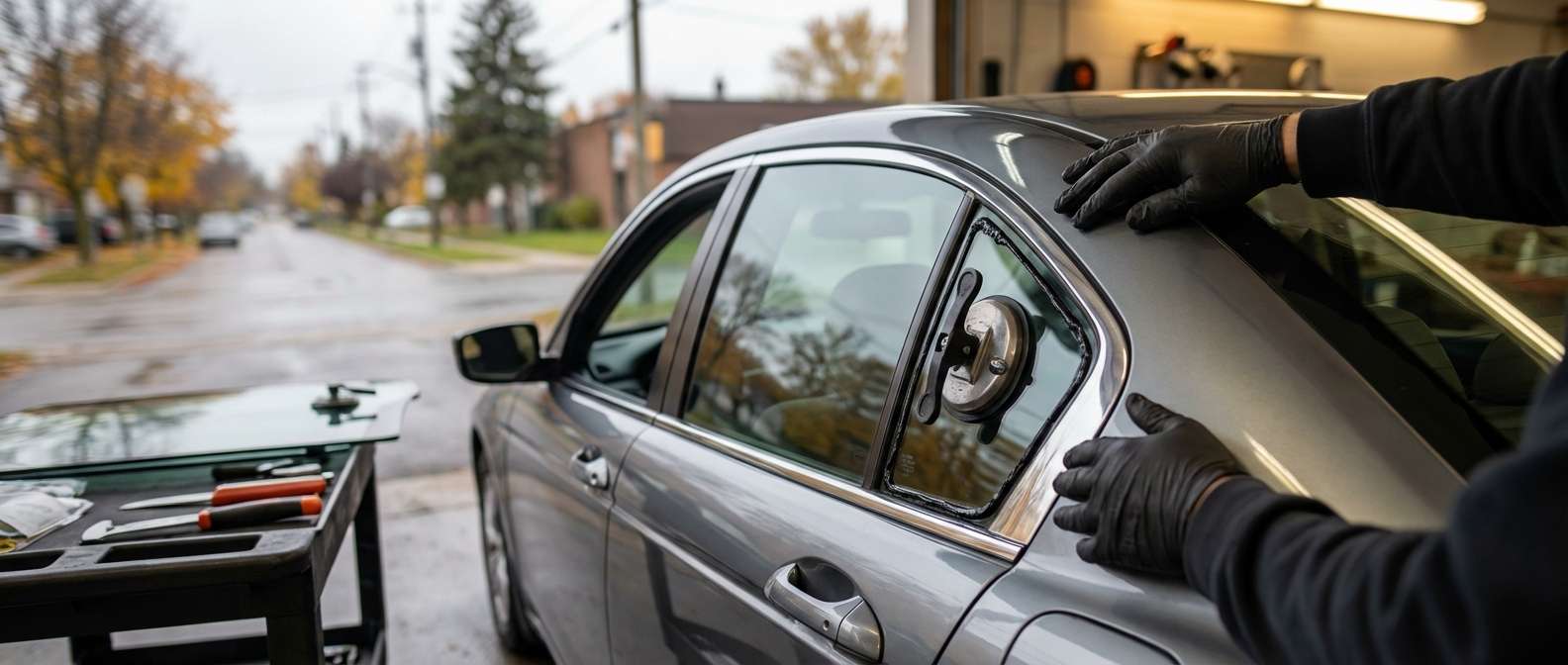
Coupe Bonded Quarter Window Versus Sedan Door Vent Glass
When replacing smaller side glass on the Accord, the architecture depends entirely on whether the car is a two-door or four-door model. On the coupe, the quarter window is bonded directly to the unibody structure at the C-pillar using polyurethane adhesive. It remains entirely static behind the B-pillar, matching up to the frameless front door window. On the sedan, this pane is not a quarter window in the structural body sense; it is a small stationary vent window mounted inside the rear door frame itself. Because it sits within the rear passenger door, it relies on a rubber vent run channel (such as Honda reference 73491-TA5-A01 for the left side) rather than urethane, held firm by a removable vertical metal division bar.
Neither format features integrated defroster lines, internal radio antennas, or electronic rain sensors. All factory and aftermarket variants—whether destined for an LX, LX-P, EX, or EX-L trim—are manufactured with a standard green safety tint. I generally plan my route so I pull up roughly an hour after your booking is finalized, bringing along the exact glass required for your specific body style.
| Vehicle Style | Glass Location | Mounting Hardware | Separating Component |
|---|---|---|---|
| 2-Door Coupe | C-Pillar / Unibody | Polyurethane & alignment clips (73552-TE0-000) | B-pillar pillar garnish |
| 4-Door Sedan | Rear Door Frame | Rubber run channel (73441-TA5-A01 / 73491-TA5-A01) | Metal division bar (72731-TA0-A01 / 72771-TA0-A01) |
Pre-Installation Checks for Accord Quarter and Vent Panes
Before installing either glass type, I examine the parts against known wear and fitment issues unique to these cars:
- Coupe perimeter reveal moulding: The outer rubber reveal trim that surrounds the coupe glass is prone to dry-rot and UV deterioration. I inspect the replacement glass to ensure the edge moulding is completely flat, supple, and securely bonded around the perimeter so it will not lift or whistle at highway speeds.
- Alignment pin integrity: Coupe glass uses built-in alignment clips to ensure the glass centers squarely within the recessed quarter panel frame. I verify these nylon tabs are intact before any adhesive meets the body.
- Sedan division bar channel seating: On four-door sedans, the vertical metal division bar (part 72771-TA0-A01 on the left side) features an internal channel that receives the rubber vent glass weatherstrip. I verify the replacement glass edge has the exact thickness needed to seat deeply inside this channel without binding against the sliding main door glass.
- Adjacent window belt moulding condition: The horizontal belt mouldings directly beneath the rear glass on both the coupe quarter panel and sedan door frequently bubble or peel their rubberized protective finish. I inspect this area to ensure the degrading factory trim does not pinch or misalign the lower edge of the incoming glass.
Post-Installation Fit and Alignment Assessment
Once the glass is in position, I confirm the mechanical clearances specific to each door style:
- Sedan division bar verticality: With the sedan vent glass seated in its run channel and the division bar re-secured, I run the primary door glass up and down completely. The division bar must stay perfectly parallel with the front run channel so the moving window glides freely without slowing, tilting, or catching on the vent rubber.
- Coupe interior garnish clearance: Inside the coupe cabin, the interior C-pillar garnish trim panel snaps back over the inner pinchweld. I confirm the trim clips snap flush against the metal without making contact with the glass edge or leaving an uneven shadow line around the rear quarter shelf.
- Exterior reveal flushness: On coupe installations, I verify the exterior rubber moulding sits dead level with the quarter panel steel all the way to the rear corner, ensuring water shedding functions correctly without pooling along the lower urethane line.


