Acoustic Lamination and Trim Differences on the Sierra 1500
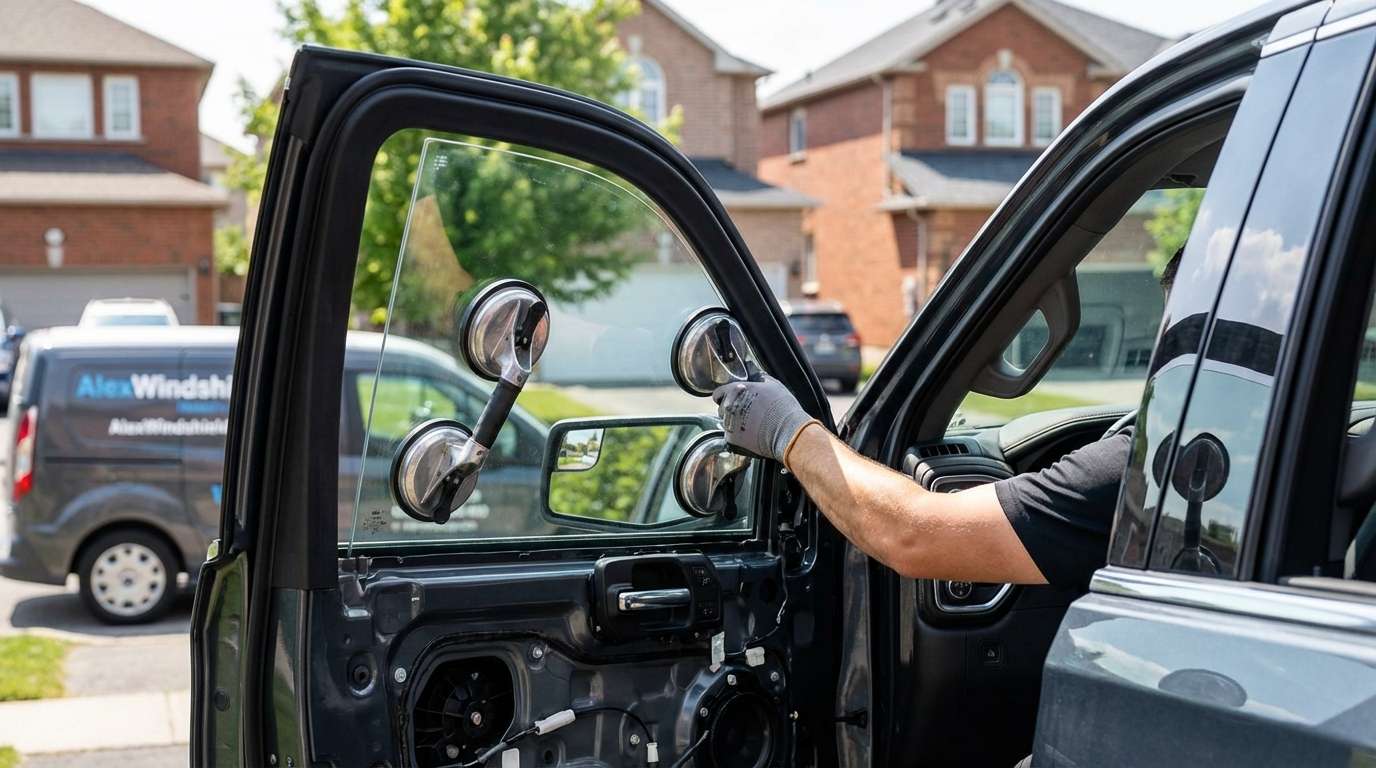
Replacing a shattered side window on this truck requires matching the exact acoustic and tint specifications engineered for the cab. On the T1XX platform, GMC equips base Work Truck and Custom builds with standard solar-absorbing green glass, while luxury packages like the SLT, AT4, and Denali receive specialized acoustic-laminated front door glass. This laminated pane sandwiches a sound-damping interlayer between two thin glass sheets to suppress highway rumble and wind turbulence around the A-pillars. If a standard tempered replacement is dropped into a Denali, the cabin gains a noticeable hiss at highway speeds.
The rear door windows introduce another split based on body style. A Double Cab uses a shorter rear door glass pane, whereas the full Crew Cab features a substantially longer glass drop. Furthermore, SLE trims and higher come standard with deep-tinted privacy glass on the rear doors, while fleet-oriented Work Trucks retain basic solar green throughout the back. While this side glass shares identical stampings and regulator fitment with the Chevrolet Silverado 1500 of the same vintage, confirming the cab layout and acoustic package is essential before sliding new glass past the exterior belt weatherstrip.
Hardware Connections, Mirror Sails, and Door Cavity Mechanics
The movable door glass mounts directly inside a full-frame steel door shell using bonded lift clips along its bottom edge. These clips secure to an electric cable-and-drum window regulator. Because this truck routes its glass through an inner division channel placed directly behind the triangular mirror sail panel, clearance inside the door pocket is tight. On Denali and AT4 trims, those adjacent mirrors house complex harnesses for blind-spot indicators, power-folding actuators, and perimeter puddle lighting, meaning the glass must drop cleanly without snagging internal harnesses or tearing the water vapor barrier.
When swapping broken glass on these doors, cleaning out the bottom of the steel shell is critical. Factory plastic regulator carriers are vulnerable to binding if stray glass shards lodge in the vertical run channels or foul the bottom travel stop. Whenever I replace a side window on your Sierra, I back the glass with a one-year warranty while standing behind my own workmanship for as long as you own the truck. Once the new aftermarket glass sits securely in the lift brackets, the anti-pinch motor requires a specific reset so the express-up feature does not falsely trip against the upper window felt.
Post-Replacement Inspection Checklist
- Run channel alignment: Ensure the glass glides smoothly into the upper door frame felt without hesitating, chattering, or tilting forward near the mirror sail panel.
- Express-up and anti-pinch operation: Hold the switch up until the glass seats, continue holding for two seconds, and verify the one-touch express-up and bounce-back safety reverse work correctly.
- Acoustic and tint match: Check that the front glass thickness and acoustic stamp match the opposite front door, and verify rear privacy darkness matches the rear cab glass.
- Inner and outer belt mouldings: Inspect the horizontal weatherstrips at the base of the window to confirm they lay flat against the glass surface without curled rubber edges.
- Door cavity rattles: Test-drive on rough pavement to ensure no loose glass fragments remain trapped beneath the window regulator track.


