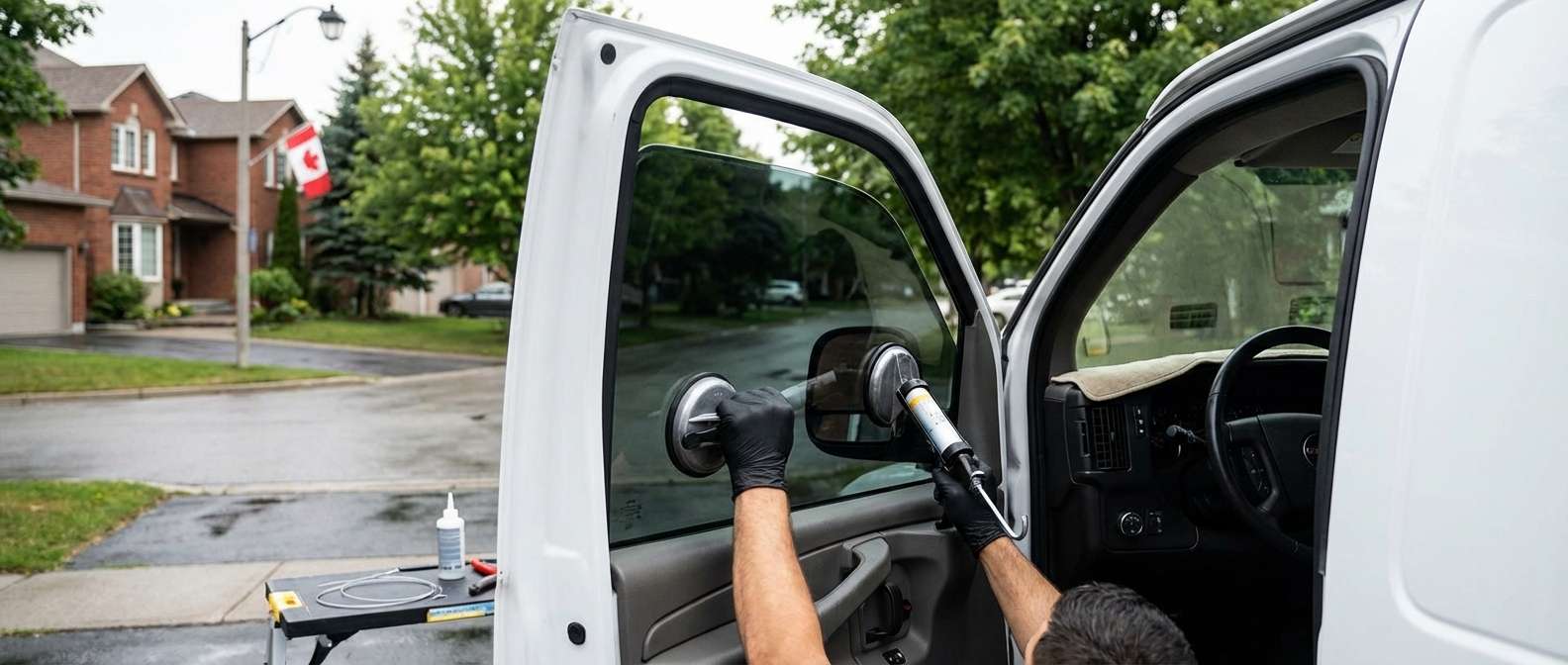
Hinged Side and Rear Cargo Door Vent Glass Design
When you look up vent glass for this full-size van, you will not find triangular glass by the front side mirrors. Instead, the catalog refers strictly to the pop-out, swing-out ventilation windows built into the 60/40 side loading doors and the 50/50 rear cargo doors. While commercial panel vans left the assembly line with either solid sheet metal or fixed urethane-bonded panes, passenger-carrying configurations featured manual outward-opening units to move air through the back cabin.
The window consists of solid tempered safety glass held at the perimeter by an exterior continuous bulb weatherstrip seated over the door frame pinch weld. Two external metal hinges anchor the pane to the steel door shell, while a lower plastic over-center toggle latch secures the bottom edge. Because these assemblies lack heating grids, radio antennas, or electronic sensors, mechanical hardware wear and physical impacts are the primary reasons for replacement.
Factory Fasteners, Rivnuts, and Toggle Latches
Replacing a damaged swing-out pane requires dealing with the unique factory assembly method used across the GMT610 platform. The original hinges were attached to the outer door frame using heavy-duty blind pop rivets rather than threaded machine screws. When a pane shatters or the upper hinge separates from the glass, I drill out those factory blind rivets directly at your home or job site across Toronto and the GTA to dismount the damaged assembly without distorting the outer door skin.
Once the original rivets are removed, reinstalling the replacement window often involves installing threaded steel rivnuts (jack nuts) or through-bolts into the door structure. This alteration provides a secure, serviceable mount that holds tighter than standard aluminum replacement rivets. At the opposite end, the interior toggle latch frequently fatigues from wind buffeting at highway speeds; if the latch arm develops play, the glass unseats from the bulb seal, generating interior cabin whistling and allowing rainwater to pool on the floorboards.
| Door Position | Glass Tint Level | OEM Reference | Seal Reference |
|---|---|---|---|
| Left Rear (Driver Side) | Solar Green (Clear) | 20955393 | 22888211 |
| Right Rear (Passenger Side) | Solar Green (Clear) | 20955394 | 22888213 |
| Left Rear (Driver Side) | Deep Privacy Tint | 20955395 | 22888211 |
| Right Rear (Passenger Side) | Deep Privacy Tint | 20955396 | 22888213 |
Matching Tint Options and Perimeter Seals
Selecting the correct replacement glass requires matching the light transmission of the surrounding panes. GM supplied these hinged units in two distinct variations: a light solar-green tint found mostly on base fleet vehicles, and a dark deep-tint privacy glass standard on high-trim passenger vans. Installing an unmatched pane leaves the vehicle noticeably asymmetrical from the curb.
The weatherstrip channel also requires close inspection during pane replacement. Over years of service, the continuous bulb seals (OEM part numbers 22888211 and 22888213) collapse from constant compression or accumulate road grit in the lower trough. If the rubber seal is cracked or hardened, the new pane will not seal flat against the frame, resulting in persistent water intrusion behind the interior trim panels even when the toggle latch is pulled completely tight.


