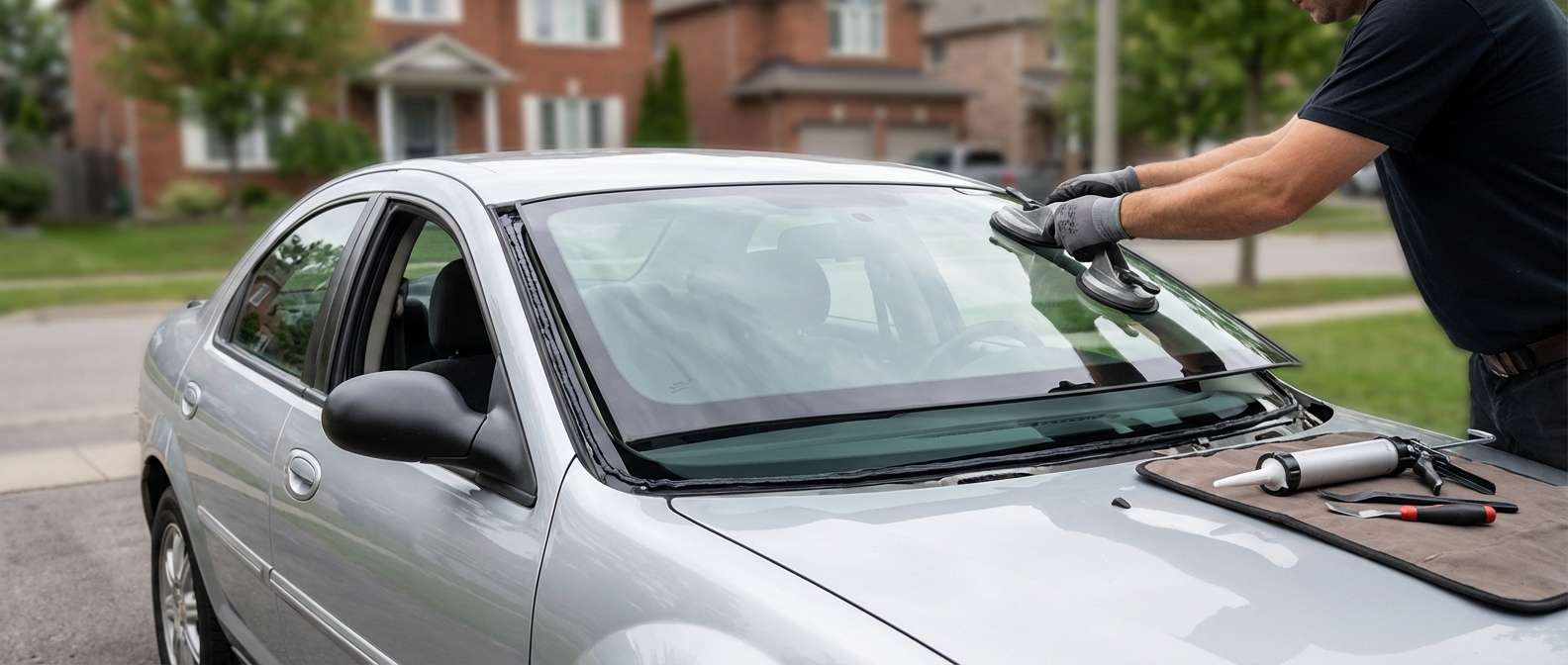
Body Styles Determine the Glass on This Vehicle
Replacing the windshield on this vehicle requires identifying the exact body style immediately, because the sedan, convertible, and coupe do not share the same glass geometry or part numbers. The four-door sedan was built on Chrysler's JR platform and takes NAGS glass part number DW01413, matching the Dodge Stratus sedan counterpart. In contrast, the two-door convertible uses NAGS DW01414 to accommodate its unique header line, while the two-door coupe—constructed on the Mitsubishi ST-22 platform rather than the Chrysler architecture—relies on either NAGS DW01415 or DW01416. Because of the Mitsubishi-sourced cowl clip geometry and hardware on the coupe, none of the surrounding retainers interchange with the sedan or convertible models either.
The glass itself across these variants features solar-absorbing green laminate intended to reduce cabin heat load, offered with or without an upper sunshade brow band. There are no embedded antennas, electrochromic heating grids along the lower wiper park area, or automated rain sensors attached to the surface. Rear-view mirrors on all three configurations mount onto an adhered metal button bonded directly to the inner surface of the windshield.
Hardware, Reveal Mouldings, and Cowl Differences
Each Sebring variant demands specific attention to its upper reveal trim and windshield perimeter hardware. The four-door sedan relies on a dedicated top reveal moulding, widely referenced by aftermarket replacement number GGG 1413 or WFT D1413, which seats directly against the roof steel. The convertible uses a specialized upper weatherstrip moulding, WTM D1272, designed to interface cleanly with the folding soft top's front header seal. I source all my glass exclusively from aftermarket manufacturers like Pilkington, FYG, PGW, and XYG, ensuring these solar-control windshields arrive with the precise contour required to meet these varying perimeter trim profiles.
At the base of the windshield sits a split, two-piece plastic cowl grille that covers the wiper linkage. On the JR-platform sedan and convertible, this plastic becomes brittle from prolonged sun exposure, requiring care when disconnecting the washer nozzles and disengaging the plastic fasteners. On the coupe, the Mitsubishi-derived mounting fasteners secure the cowl differently, requiring a specific pull angle to prevent fracturing the retaining tabs. Both A-pillars inside the cabin carry snap-on plastic interior pillar mouldings that house the wiring for the lighted sun visors and the overhead console map lights, which must remain clear of the glass perimeter during the work.
Water Leak Diagnosis on Convertibles and Pillar Construction
Convertible owners frequently suspect a failed windshield seal when they discover water pooled on the front floor carpets, but the root cause on this car is rarely a failure in the urethane perimeter. The A-pillar weatherstripping channels interface with frameless side glass, routing water down past the header joint. A widespread problem on this model stems from degraded factory butyl seals where the upper windshield corner weatherstrip overlaps the folding roof header, directing rainwater straight down the interior trim panels rather than outside the body.
Because the sedan and coupe rely on the glued windshield glass to provide structural roof-crush resistance, a solid bond to the steel pinchweld is critical. Frameless door windows on the coupe and convertible also exert lateral pressure against the pillar rubber seals every time the doors close. Verifying that the glass sits flush with the factory A-pillar reveal prevents ongoing wind whistle and ensures the door glass mates properly against the pillar channels.


