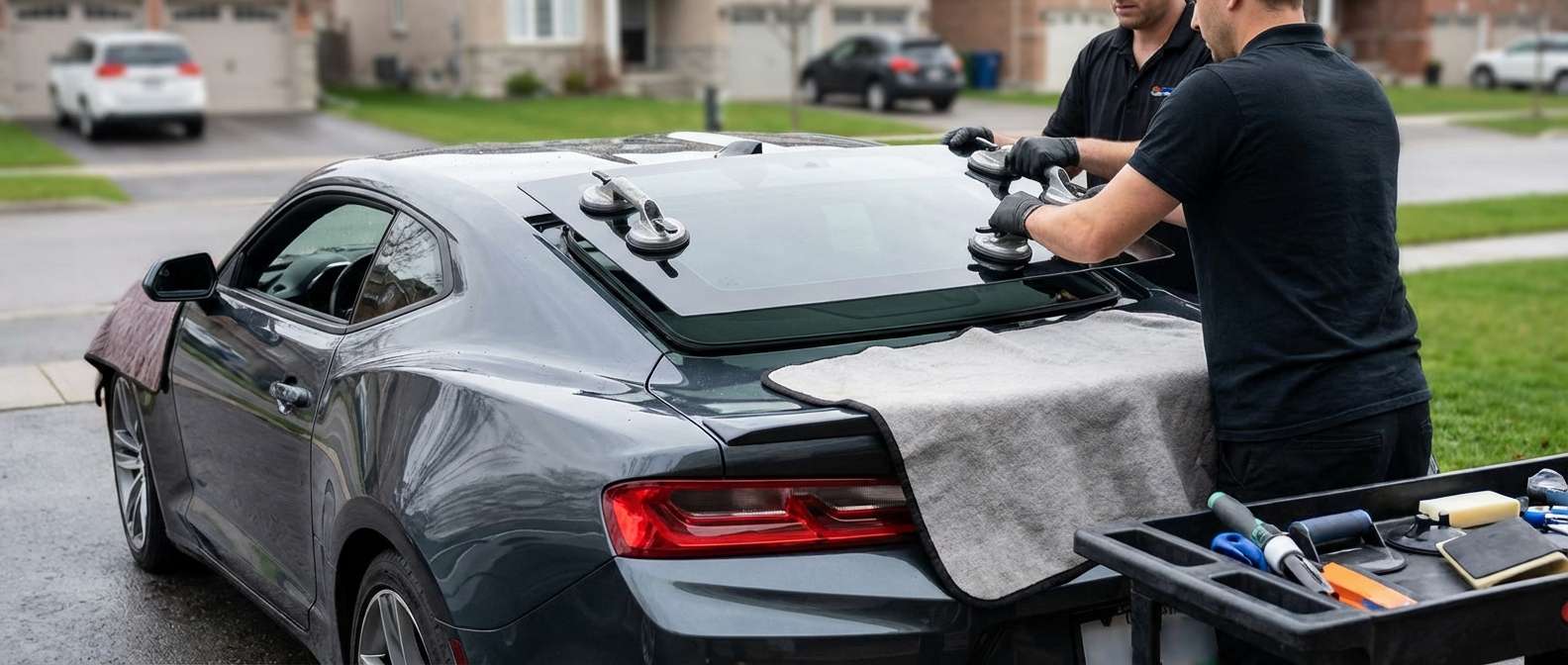
Coupe or Convertible: Why the Rear Window Architecture Changes Everything
When the back glass shatters on this car, the repair approach hinges entirely on whether you drive a hardtop or a droptop. On the Coupe, the rear window is a stationary, heavily raked panel bonded directly to the steel body frame between the welded roof skin, the thick C-pillars, and the rear decklid seam. GM originally issued this panel under part number 23493126, later updating it to 84098987, and currently supplies it as OEM part number 84639368.
If you own a Convertible, the situation is completely different. The glass is not bonded to a metal pinchweld; it is heat-sealed and bonded directly into the multi-layer fabric folding soft top. General Motors does not sell or service the convertible rear glass as an independent replacement piece. If the glass breaks or detaches from the canvas—a defect recognized by GM in Technical Service Bulletin 17-NA-216—factory procedures mandate replacing the entire folding convertible top cover assembly rather than swapping out a single pane of glass.
Defroster Grids, Radio Diversity Antennas, and Glass Specs
The Coupe rear window is made from tempered safety glass treated with solar control tint to fight heat build-up under that nearly horizontal rear profile. It serves two distinct electrical functions across its surface:
- Horizontal defogger lines: Resistive heating tracks cross the lower and middle sightlines to clear frost and condensation.
- Diversity AM/FM antenna: The upper portion of the glass incorporates embedded antenna lines rather than relying solely on a mast, keeping the car's body lines clean.
When I replace one of these rear windows, I use high-grade aftermarket glass from manufacturers like Pilkington, PGW, FYG, or XYG, which mirror the original heat-grid layout and electrical impedance precisely. Both the antenna and defroster systems rely on spade terminals soldered directly onto the edge of the inner glass face. A common issue on these cars stems from aftermarket window tint removal or aggressive interior detailing, which can tear the soldered tab right off the glass, instantly killing radio reception or the rear defogger circuit.
Unlike the front windshield, the Coupe back glass does not house camera mounts or rain sensors. Even on 2019 and newer trims equipped with the digital Rear Camera Mirror, the wide-angle camera feeds from an exterior housing, keeping the back window purely structural and electrical.
Replacing the Coupe Back Glass: Surrounding Panels
The fastback profile creates a very tight, recessed glass pocket. The glass drops into a flush-mount channel along the quarter panels without bulky exterior rubber trims or vintage-style chrome reveals. Inside the cabin, the inner perimeter of the glass borders the molded C-pillar interior garnish trims and drops down directly behind the wide rear parcel shelf tray. These interior elements sit exceptionally close to the glass edge, requiring careful handling so the inner defroster tabs and the high-mount center stop lamp housing beneath the window remain completely untouched during the repair.
Can a detached convertible back window be glued back in?
While some upholstery shops attempt silicone or fabric-to-glass adhesive fixes, they rarely hold under the tension of the folding top mechanism. Per GM bulletin 17-NA-216, factory-standard repair for delamination or breakage on the convertible requires replacing the fabric top cover assembly, as standalone stationary glass replacement is only possible on Coupe models.
Does replacing the back glass affect the Rear Camera Mirror?
No. On trims equipped with GM's digital streaming rearview mirror, the camera unit is housed externally on the vehicle body rather than attached to the inside of the rear window. Replacing the back glass will not disturb the camera lens, its wiring, or its rearward image display.
Why did my AM/FM radio stop working after my rear glass broke?
The radio diversity antenna is physically printed onto the upper section of the rear glass. When the tempered panel breaks or the factory wiring harness unplugs from the solder tabs at the window border, the tuner loses its primary signal feed.


