The Pillarless Side Profile and Retractable Quarter Vent Glass
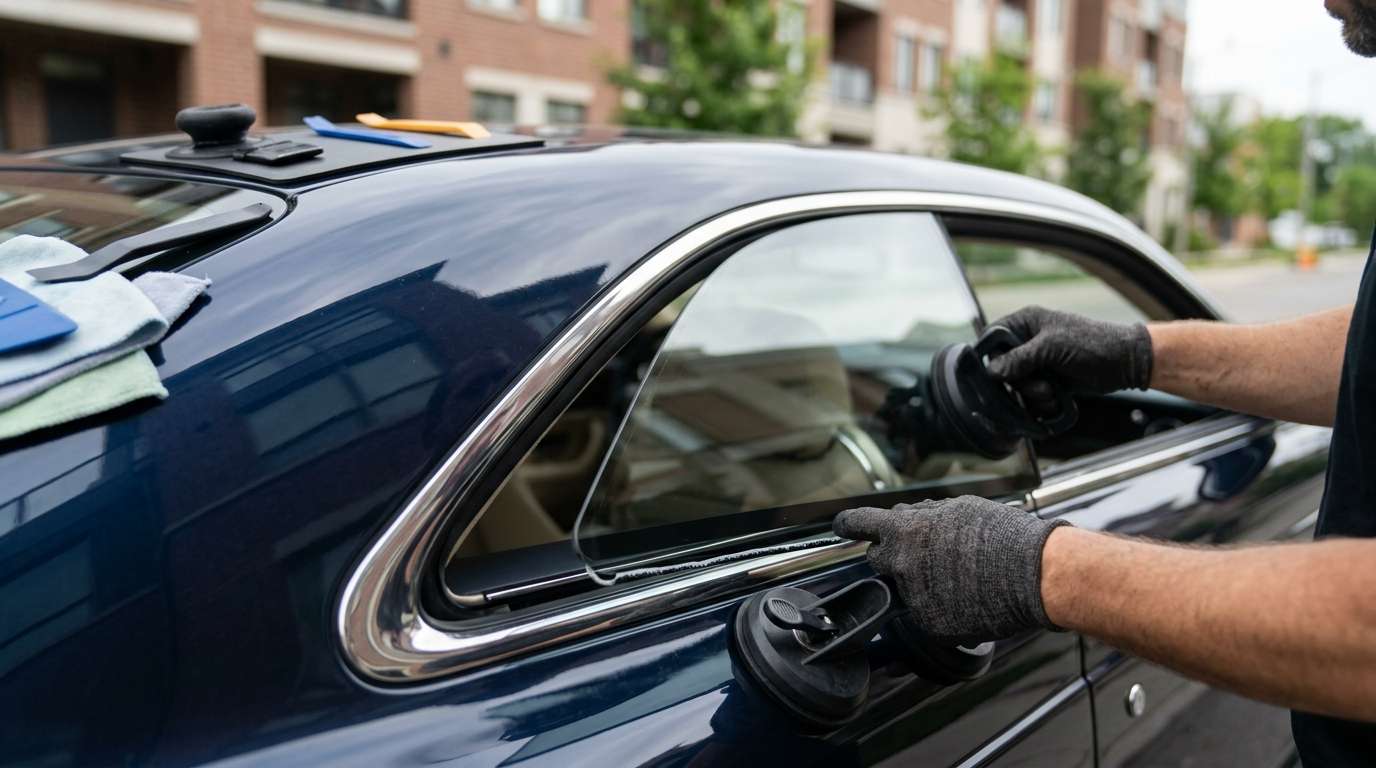
Replacing the side quarter glass on this hand-assembled grand tourer requires an understanding of its pillarless architecture. Cataloged in many auto glass ordering directories under rear quarter or rear vent glass, these units do not sit fixed inside a stationary frame. Instead, the rear glass drops down fully into the rear quarter bodywork. There is no exterior division bar or exposed B-pillar between the front door drop-glass and this rear glass panel, meaning the two panes meet directly in mid-air when raised. The leading edge of the retractable rear glass carries an integrated vertical weatherstrip channel that creates the acoustic seal directly against the trailing border of the frameless front door window.
Because the body contours flow smoothly from the A-pillar through to the rear haunches, the glass panel must mate perfectly with the surrounding exterior brightwork. Polished stainless steel exterior waist rails and perimeter mouldings flank the opening, leaving microscopic room for alignment error. When the cabin switch triggers all four windows to drop simultaneously, the glass must clear the inner cavity without snagging the internal regulators. Because of the bespoke coachwork, I provide a full year of product coverage on the replacement glass pane alongside my lifetime guarantee covering all aspects of the physical installation workmanship.
Interior Surround Disassembly and Regulator Alignment Tolerances
Accessing the regulator assembly to service or replace the quarter glass involves navigating the bespoke rear seating area. The glass mechanism hides entirely beneath hand-matched bookmatched wood veneer waistrails, leather-wrapped quarter capping panels, and deep armrest structures. Removing these appointments requires specialized trim tools to preserve the hand-stitched hides and prevent stress fractures in the aged lacquer of the timber trim. The inner steel skin beneath the upholstery reveals the carrier hardware where the glass rests on an intricate carriage system.
The heavy acoustic pane puts high demands on its lifting cables and drive motor. Securing the replacement into the carrier requires setting factory-level tilt, depth, and pitch adjustments using the multi-point adjustment bolts and leveling shims located on the regulator frame. If the pitch leans outward by even a single millimeter, the vertical edge seal will fail to compress against the door window, inducing high-speed wind buffeting along the roofline. Conversely, tipping the glass too far inward causes excessive friction against the rear roof drip rail weatherstripping, causing the motor to bind or thermal-overload before reaching the fully closed position.
Acoustic Glazing Composition and Weatherstrip Integration
The glass itself is constructed as a thick acoustic laminated pane with a solar-control interlayer, tinted in Bentley's subtle factory neutral-green hue to maintain visual consistency with the door glass. This laminated build suppresses external buffeting and manages cabin temperature, but it adds substantial physical weight compared to standard single-pane tempered quarter glass found on high-volume coupes. The lower edge of the pane mounts into heavy-duty retention clamps engineered to balance this mass without introducing localized stress points across the laminated layers.
During a replacement, the condition of the vertical rubber-and-felt seal bonded along the forward edge of the glass dictates the overall noise isolation of the cabin. When this interface loses flexibility or suffers physical damage, it compromises the pressurized air seal between the front and rear compartments. Aligning the new pane ensures that the glass makes positive, uniform contact along this vertical joint without pinching the lip, delivering the silent cruising environment expected of a limited-run coachbuilt automobile.


