The First-Generation Audi Q7: Restoring the Integrity of a German Fortress
The Audi Q7 (2007-2015) represents a pivotal moment in luxury SUV history. As the first SUV from Audi, specifically the "Type 4L" chassis, it was engineered not just as a vehicle, but as a sanctuary of safety and performance. When the windshield of such a sophisticated machine is compromised, it is not merely a cosmetic flaw; it is a breach in the structural rigidity of a vehicle designed to protect your family. At AlexWindshield, we understand that replacing the glass on a Q7 requires more than just tools—it requires an intimate understanding of German automotive architecture.
A standard glass swap shop might treat your Q7 like a compact economy car, but the reality is vastly different. The sheer size of the Q7 windshield, combined with the complex integration of the Rain/Light Sensor and optional Lane Departure Warning systems found in the 2011-2015 facelifts, demands a Master Technician's touch. A poor installation doesn't just risk leaks; it compromises the roof crush resistance and airbag deployment trajectory. Below, we detail our meticulous, factory-standard process for restoring your Audi to its original glory.
Service Availability: Expert Auto Glass Solutions Across the GTA
Whether you are parked in a driveway in Vaughan, managing a fleet in Richmond Hill, or working at an office in Markham, our mobile units bring the workshop to you. We specialize in servicing the entire Greater Toronto Area (GTA), understanding the unique environmental challenges our local roads pose to your windshield—from the construction debris on Highway 407 to the extreme temperature fluctuations of Ontario winters.
Residents in Vaughan and Markham often face long commutes where a crack can quickly spread due to windshield defrosters and chassis flex. Our mobile service eliminates the need for you to drive a compromised vehicle to a shop. We arrive fully equipped to handle the specific requirements of the Audi Q7 right at your location.
Technical Profile: The Audi Q7 (2007-2015) Windshield Ecosystem
Before we begin the extraction, it is vital to understand what we are working with. The Audi Q7 windshield acts as a backstop for the passenger-side airbag and contributes up to 60% of the vehicle's roof strength in a rollover accident. The specific glass for the 2007-2015 model years often includes:
- Acoustic Interlayer: A specialized layer designed to dampen the diesel engine noise and road vibration common in large SUVs.
- Rain/Light Sensor Brackets: Located behind the rearview mirror, these sensors automatically trigger wipers and headlights. The gel pad connecting the sensor to the glass is single-use and must be replaced to ensure functionality.
- VIN Window: A specific cutout to display the Vehicle Identification Number on the dashboard.
- Solar Coating: Many Q7 models come with heat-reflective glass to reduce the load on the climate control system.
Step-by-Step Replacement Process: The AlexWindshield Standard
Replacing the windshield on an Audi Q7 is a surgical procedure. Here is the A-to-Z breakdown of how our Master Technicians handle your vehicle.
Phase 1: Pre-Installation Inspection and Protection
Preparation is the foundation of a successful install. We never rush this stage.
- Vehicle Pre-Scan: We inspect the dashboard for any pre-existing warning lights. For models equipped with ADAS (Advanced Driver Assistance Systems), we verify the current status of the camera systems.
- Interior Protection: The Q7 features premium leather and soft-touch dashboard materials. We cover the front seats, steering wheel, and gear shifter with protective covers.
- Exterior Masking: To prevent belt buckles or tools from scratching the paint, we apply protective tape to the A-pillars and cover the front fenders with heavy-duty mats.
Phase 2: Disassembly of Components
Accessing the glass edge requires removing several peripheral components without breaking the brittle plastic clips common in older (2007-2010) models.
- Wiper Assembly Removal: The Q7 wipers are heavy-duty. We remove the nut covers and use a specialized wiper arm puller to detach the arms without damaging the splines on the wiper transmission posts.
- Cowl Panel Removal: The plastic cowling (the valance panel at the bottom of the windshield) is carefully unclipped. We disconnect the washer fluid hoses and remove the panel to expose the bottom edge of the glass.
- Sensor Disconnection: Inside the cabin, we dismantle the plastic housing behind the rearview mirror. We carefully unplug the rain/light sensor and, if equipped, the ADAS camera module.
- Mirror Removal: The rearview mirror is detached from the mounting button on the glass with a precise twist-lock motion to avoid damaging the internal spring mechanism.
Phase 3: The Cut-Out (Glass Removal)
This is the most critical phase for preserving the vehicle's body integrity.
- Lubrication: We spray a cutting lubricant along the molding edges to facilitate a smooth cut.
- Fiber Line or Cold Knife Extraction: We prefer using a high-strength synthetic fiber line (braided wire) system like the Spider or Viper. Unlike metal blades, the fiber line cuts through the urethane adhesive without scratching the metal pinch weld. Scratches on the pinch weld are the #1 cause of hidden rust that destroys the vehicle frame years later.
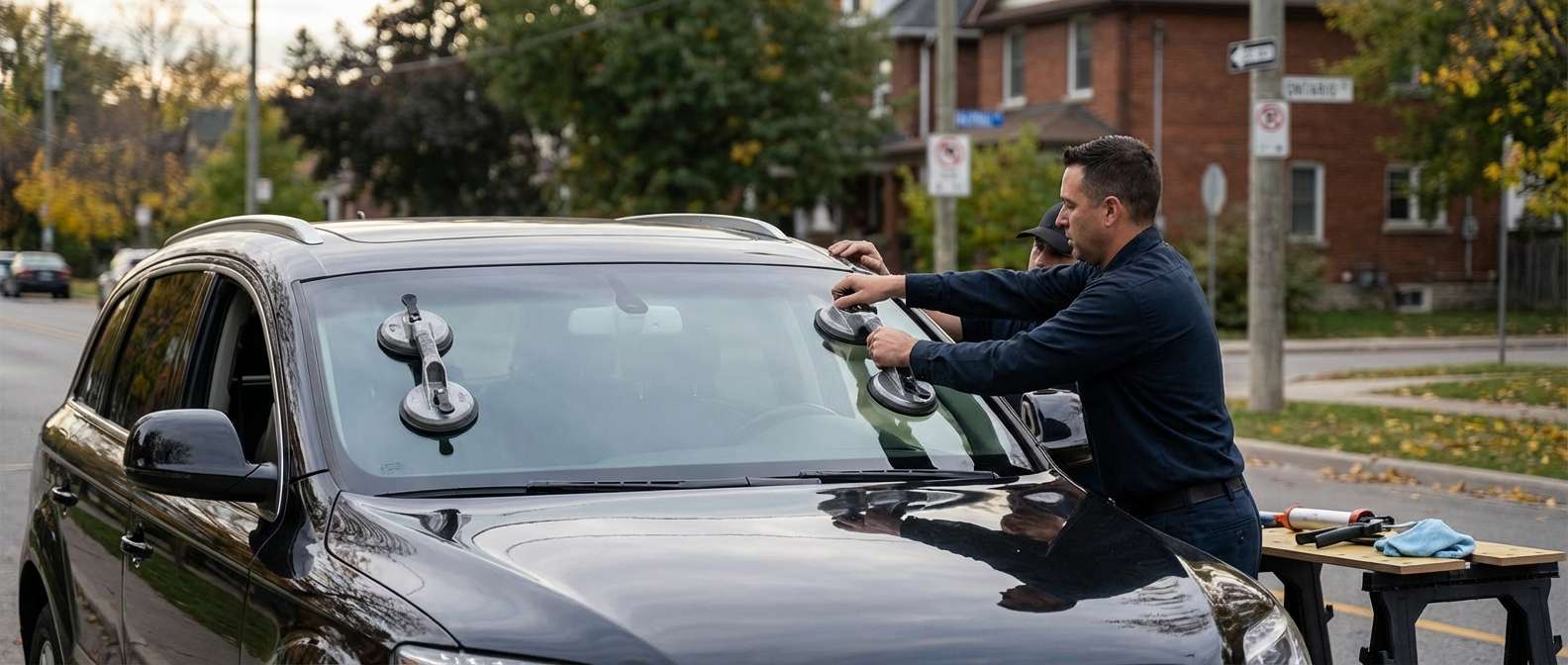
- Glass Lift: Using heavy-duty suction cups (the Q7 windshield is significantly heavier than a sedan's), two technicians lift the glass away from the vehicle body to ensure it does not slide and scratch the hood.
Phase 4: Surface Preparation and Rust Prevention
The bond is only as strong as the surface preparation. We adhere to the strictest chemical protocols.
- Trimming the Old Bead: We trim the existing urethane bead down to approximately 1-2mm. This "old" urethane acts as the best possible bonding surface for the new adhesive.
- Pinch Weld Inspection: If any minor scratches occurred during past replacements by other shops, we sand them down to bare metal and apply a self-etching anti-corrosion primer.
- Cleaning the Aperture: We vacuum any debris from the dashboard and the channel where the glass sits. We then clean the bonding area with a specialized impurity-removing agent.
Phase 5: Priming and Adhesive Application
We use only OEM-grade Sika or Dow chemical systems.
- Glass Preparation: The new windshield is cleaned with a glass activator. We apply a blackout primer to the frit band (the black border) of the new glass. This primer protects the urethane from UV degradation, which can cause the glass to detach over time.
- Urethane Application: We apply a high-modulus, non-conductive urethane adhesive. "Non-conductive" is crucial for the Audi Q7 because conductive glues can interfere with the radio antenna often embedded in the glass or rear windows, and disrupt sensitive electronics.
- V-Bead Method: We apply the glue in a triangular "V" shape. This ensures that when the glass is pressed down, the glue spreads evenly without trapping air bubbles, guaranteeing a waterproof seal.
Phase 6: Installation and Reassembly
- The Set: Using suction cups, we precisely lower the new windshield onto the pinch weld. We align the VIN window perfectly and ensure the gap between the roof and the glass is symmetrical.
- Decking: We gently press the glass to seat the adhesive, ensuring full contact around the entire perimeter.
- Sensor Re-Gel: We apply a new, optical-grade gel pad to the rain sensor and reattach it to the bracket pre-molded onto the new glass. Reusing old gel pads leads to malfunctioning auto-wipers.
- Cowl and Wiper Reinstall: The cowl panel is snapped back into place, and wipers are re-torqued to factory specifications.
Mandatory ADAS Calibration: The Final Safety Step
For Audi Q7 models (specifically 2011-2015) equipped with Audi Lane Assist or Adaptive Cruise Control, the job is not finished when the glass is set. The forward-facing camera is mounted directly to the windshield. When the glass is replaced, the angle of the camera changes slightly—even by a fraction of a degree.
Why is this critical? A camera misaligned by just 1 degree can result in the vehicle miscalculating the distance to the car ahead or failing to keep you in your lane on Highway 404.
At AlexWindshield, we perform a comprehensive Dynamic or Static Calibration depending on your specific VIN requirements:
- Static Calibration: This is done in our controlled environment using specialized target boards that mimic road patterns. The vehicle's computer scans these targets to realign the camera's focal point.
- Dynamic Calibration: For some Q7 models, we connect a diagnostic tablet to the OBDII port and drive the vehicle on marked roads (like major routes in Markham or Richmond Hill) at specific speeds to allow the system to "re-learn" the road geometry.
We provide a certificate of calibration upon completion, ensuring your safety systems are fully operational.
Why Choose AlexWindshield for Your Audi Q7?
The Audi Q7 is a machine that demands respect. Choosing the cheapest option often leads to wind noise, water leaks damaging the fuse box (located near the pillars), and rust. AlexWindshield offers a premium service designed for premium vehicles.
- Lifetime Warranty: We stand behind our workmanship for as long as you own the vehicle. If there is an air leak or water leak due to our installation, we fix it for free.
- OEM Quality Glass: We use glass that meets or exceeds Original Equipment Manufacturer standards (Pilkington, PGW, Saint-Gobain), ensuring identical clarity, acoustic properties, and durability to the glass installed at the German factory.
- Master Technicians: Our team is trained specifically on European luxury vehicles. We know the difference between a Q7 clip and a standard clip.
- Mobile Convenience in the GTA: We service Vaughan, Richmond Hill, Markham, and beyond, saving you time and hassle.
Ready to Restore Your View?
Don't compromise on safety or quality. If your Audi Q7 windshield is cracked or chipped, trust the experts who understand the engineering behind the glass.
Contact AlexWindshield today for a quote and experience the best mobile auto glass service in the Greater Toronto Area. Drive with confidence knowing your vehicle is sealed, calibrated, and secure.


