Toyota C1A14 Front Camera Low Voltage Error: Diagnosis and Repair
If you drive a newer Toyota and suddenly see a cluster of safety warnings light up your dash, you might be dealing with the C1A14 error code. As a master technician, I see this specific "Front Camera Low Voltage" issue pop up frequently in our shop, especially on RAV4s, Camrys, and Highlanders equipped with Toyota Safety Sense (TSS). Let us break down exactly what this code means, why it happens, and how to fix it in your driveway or at the shop.
What Does the C1A14 Code Mean?
The C1A14 code triggers when the forward-facing camera behind your rearview mirror detects a drop in its power supply. This camera needs a steady 12 volts to operate the Pre-Collision System (PCS) and Lane Departure Alert (LDA). When the voltage drops below the required threshold, the engine control module shuts the camera down to prevent erratic behavior.
Symptoms You Will Notice
- Warning Messages: "Front Camera Unavailable" or "PCS Malfunction" on the multi-information display.
- Disabled Features: Lane Departure Alert and Auto High Beams stop working.
- Warning Lights: The yellow master warning triangle stays illuminated on the dash.
Root Causes of the Voltage Drop
Finding the source of the low voltage takes a bit of digging. Here is what usually causes the C1A14 code:
- Weak 12V Battery: Canadian winters are tough on batteries. A drop in overall system voltage during engine cranking often triggers this camera code before anything else.
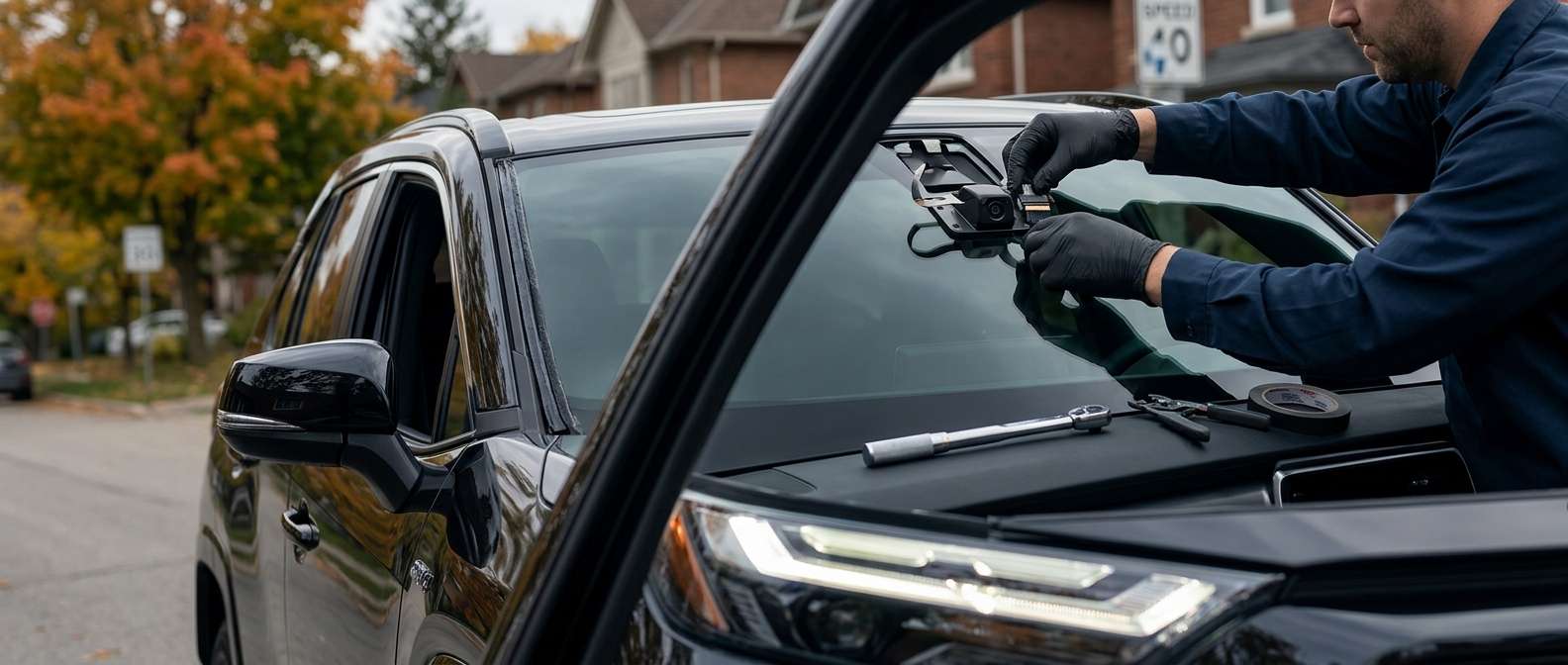
- Pinched Wiring: We see this constantly after a sloppy windshield replacement. The wire harness running up to the headliner gets crushed or cut by the urethane adhesive.
- Corroded Connectors: Condensation buildup on the inside of the windshield can cause the camera plug pins to turn green with corrosion, increasing electrical resistance.
- Blown Fuses: A short circuit in the overhead console area can blow the specific fuse powering the camera unit.
Step-by-Step Diagnosis and Repair
Grab your multimeter and a plastic trim tool. Here is how we tackle this problem on the shop floor.
1. Test the Main Battery
Start at the source. Put your multimeter across the battery terminals with the engine off. You want to see at least 12.4 volts. If the battery is weak, charge it or replace it. A failing battery is the number one culprit for phantom low-voltage codes.
2. Inspect the Camera Harness
Pop off the plastic cover behind the rearview mirror. Unplug the camera harness and inspect the pins. Look for bent metal or corrosion. Next, turn the ignition on (engine off) and probe the power wire on the harness plug. You should read battery voltage. If you read zero, you have an open circuit or a blown fuse.
3. Check the Fuses
Locate the interior fuse box under the driver side dash. Pull and test the fuses related to the safety systems, usually labeled ECU-IG2 or similar depending on your Toyota model. Replace any blown fuses and retest the camera power.
Recalibration is Mandatory
Once you fix the wiring or battery issue and clear the C1A14 code with an OBD2 scanner, you are not entirely done. If the camera was unplugged or the windshield was replaced, the TSS system requires a fresh static recalibration. The camera needs to learn its exact position to judge distances accurately on the road.
Expert Windshield and Camera Services in the GTA
Dealing with damaged wires from a bad glass installation is frustrating. If you need a windshield replacement done right the first time, trust AlexWindshield. We provide premium mobile auto glass services across the GTA, ensuring your Toyota Safety Sense cameras are handled properly and fully recalibrated on-site. Every replacement we do is backed by our Lifetime Warranty, so you can get back on the road safely and with total confidence.


