Dealing with Code B1317: When Your Car's Voltage Runs Too High
Ever plugged a scanner into your car and seen B1317 pop up? As a tech who's spent years under the hood and behind the dash, I can tell you this code means your vehicle's system voltage is running way too high. Usually, this points straight to the charging system. But what surprises a lot of drivers is how a massive voltage spike messes with modern safety systems, including the cameras and sensors mounted right on your windshield.
Signs You Have a B1317 Code
You won't just see a check engine or battery light. High voltage fries sensitive electronics fast. Here is what you will likely notice from the driver's seat:
- Headlight issues: Bulbs burning out unusually fast or glowing way too bright while driving.
- Battery damage: The battery case might look bloated or smell like rotten eggs because the battery acid is literally boiling.
- Windshield ADAS failures: If your lane departure warning or collision alert suddenly quits, the high voltage likely tripped the safety module connected to your windshield camera.
What Causes the Voltage to Spike?
A healthy car electrical system in Canada usually runs around 13.5 to 14.5 volts while the engine is running. When it pushes past 15 volts, the computer throws the B1317 code. Here is why it happens:
- Faulty Alternator Voltage Regulator: This is the culprit most of the time. If the regulator fails, the alternator pumps unregulated juice directly into the battery and the rest of the electrical system.
- Bad Battery: Sometimes a severely degraded battery with a dead cell causes the alternator to overcompensate and spike the voltage.
- Wiring Shorts: Damaged wiring harnesses or poor ground connections can trick the computer into overcharging the system.
How We Fix Code B1317
Don't ignore this code. High voltage will melt expensive control modules and ruin your windshield-mounted sensors. Here is the step-by-step process I use to track down and fix the issue:
- Step 1: Test the Battery and Alternator. Grab a digital multimeter. Check the voltage at the battery terminals with the engine running. If it reads over 15 volts, the alternator is definitely overcharging.
- Step 2: Inspect the Wiring. Look for corroded grounds or chewed wires near the alternator. Clean the battery terminals and tighten everything down to rule out a loose connection causing resistance.
- Step 3: Replace the Alternator. Since the voltage regulator is built directly into the alternator on most modern cars, you will usually need to swap out the entire alternator assembly to fix the overcharging issue.
- Step 4: Recalibrate Windshield Sensors. Once the voltage is stabilized and the codes are cleared, any Advanced Driver Assistance Systems (ADAS) cameras on your windshield might need a hard reset or professional recalibration to clear the safety lockouts caused by the power surge.
The Hidden Link Between Voltage Spikes and Auto Glass
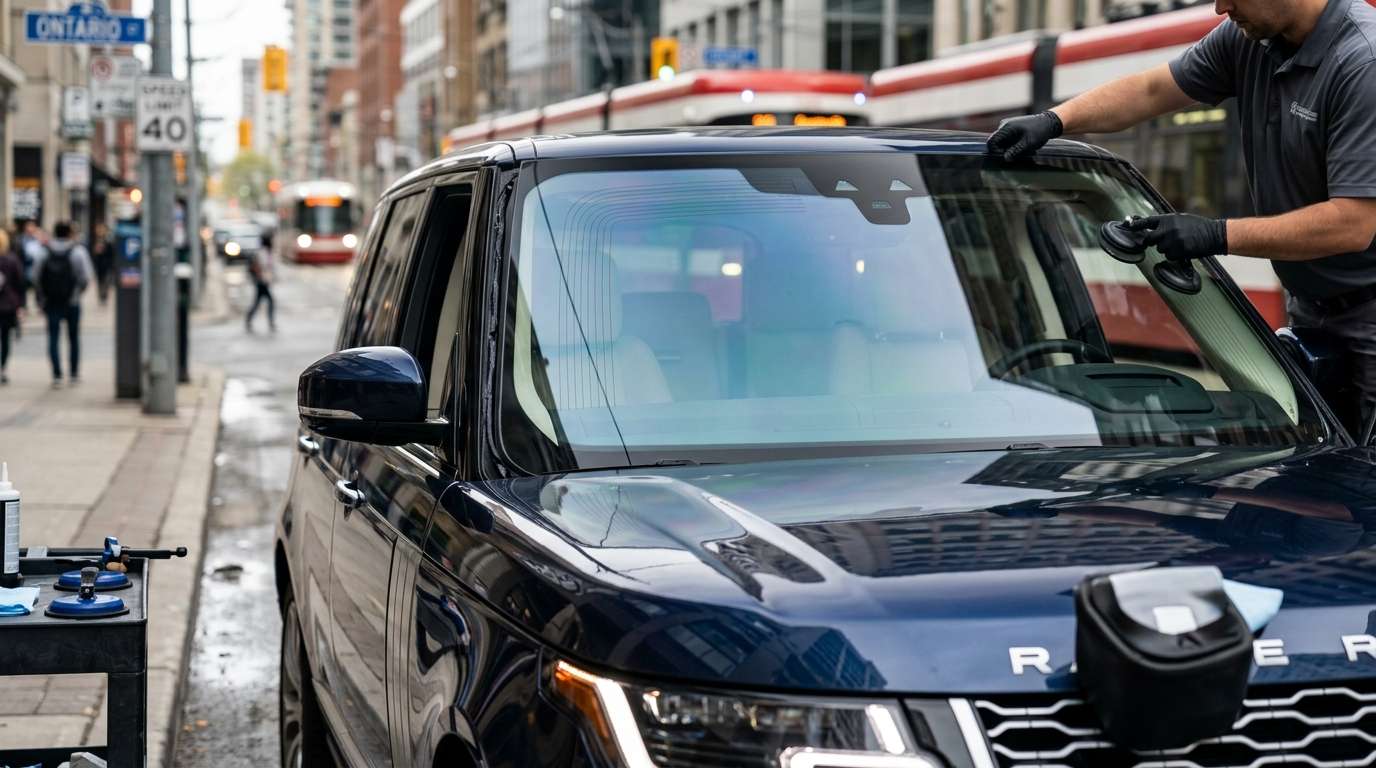
Modern windshields are packed with expensive tech. Rain sensors, defroster grids, and forward-facing cameras all rely on stable, consistent power. A B1317 code can easily short out the heating elements in a heated windshield or knock your ADAS cameras completely offline. If a power surge damages the camera bracket wiring, or the glass needs replacing due to an electrical short near the cowl, you need a glass specialist who actually understands automotive electrical systems.
Trust AlexWindshield for Your Auto Glass Needs in the GTA
If electrical gremlins have messed with your windshield sensors, or you just need a fresh piece of glass after dealing with electrical repairs, give us a shout. At AlexWindshield, we handle expert mobile auto glass services across the GTA. We know exactly how to handle the glass and the complex tech attached to it, and we back our work with a solid Lifetime Warranty. We come right to your driveway or workplace so you can get back on the road safely and securely.


