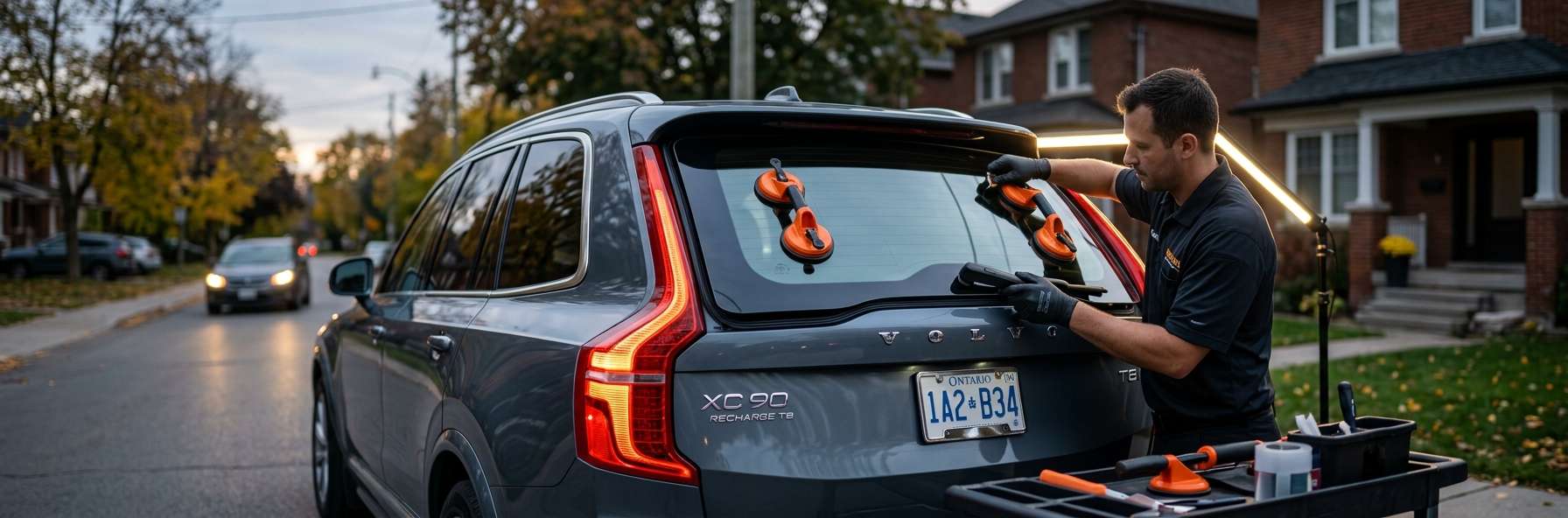
Rear Glass Features and Pre-Fit Checks on the Second-Gen Hatch
Checking an uninstalled rear window for this vehicle means verifying the integrated hardware before it ever touches the tailgate. The tempered privacy glass panel sits recessed within a one-piece power liftgate, but its physical build includes very specific factory cutouts and electrical traces. First, I inspect the lower-middle section for the factory-drilled wiper spindle pass-through hole. The rear wiper arm mounts directly through this hole to mate with the motor assembly beneath it, so the diameter and edge smoothing of that bore must be exact to prevent cracking under arm tension.
Next, I verify the ceramic frit boundary and the horizontal heating grid lines. On Volvo's SPA platform, the defroster grid connects to power tabs concealed under the composite interior garnish moldings. I run a continuity check across the terminal solder points to confirm the heating elements are unbroken. The privacy tint is baked into the glass matrix rather than applied as a film, meaning the dark factory solar shading must match the stationary quarter glass panels on the rear quarters without any optical wave distortion.
Clearing the Inner Tailgate and Alignment Around the D-Pillar Lamps
When this curved tempered window shatters, it breaks into small safety pellets that drop directly into the interior steel shell of the hatch. When you schedule a service, I typically arrive at your location within about an hour of booking to secure the vehicle and handle the cleanup. Getting the interior trim off the tailgate is mandatory on this SUV; if broken glass remains trapped in the bottom cavity, it rattles against the metal shell and frequently migrates into the motorized power latch assembly, preventing the liftgate from cinching shut.
After vacuuming the bottom frame and cleaning out the wiper motor recess, I check the outer physical clearances:
- Top spoiler alignment: The upper edge of the rear glass sits tucked directly beneath the roof-line tailgate spoiler. This trim houses the High-Mounted Stop Lamp and the integrated washer jet, leaving tight clearance that must not contact the top glass edge.
- Vertical taillight margins: The sides of the back window run parallel to Volvo's tall, signature vertical taillight assemblies mounted along the D-pillars. The lateral gaps on both sides must remain completely uniform so the glass does not bind against the plastic light housings when the hatch flexes during road travel.
- Rear wiper seating: Once the glass is in position, the wiper pivot shaft must center through the lower pass-through hole without touching the glass edges, isolated by its rubber grommet before the exterior wiper arm is torqued down.
Post-Installation Functional Verifications
Once the hatch trim is snapped back together, I test the components connected to the rear window. The defroster tabs must draw power properly without triggering rear electrical module faults on the dashboard. I also run the rear wiper system through several sweep cycles; the blade must glide flat across the curved tempered surface without catching on the lower defroster lines or binding at the motor pass-through grommet. Finally, the rear washer nozzle built into the upper spoiler must spray cleanly across the upper wipe zone without leaking fluid behind the new glass seal.
Why did the rear window shatter without an apparent impact?
Tempered tailgate glass holds high internal surface tension. A severe thermal shift—such as using the rear defroster on a freezing morning—can cause a panel to pop suddenly if it previously suffered a microscopic stone chip or contained an internal nickel-sulfide inclusion from manufacturing.
Can the rear glass open independently from the power liftgate?
No. The rear window on this SUV is a stationary direct-glazed panel bonded to the steel structure of the hatch. It does not flip open on hinges, and access to the cargo compartment requires opening the entire power tailgate.


