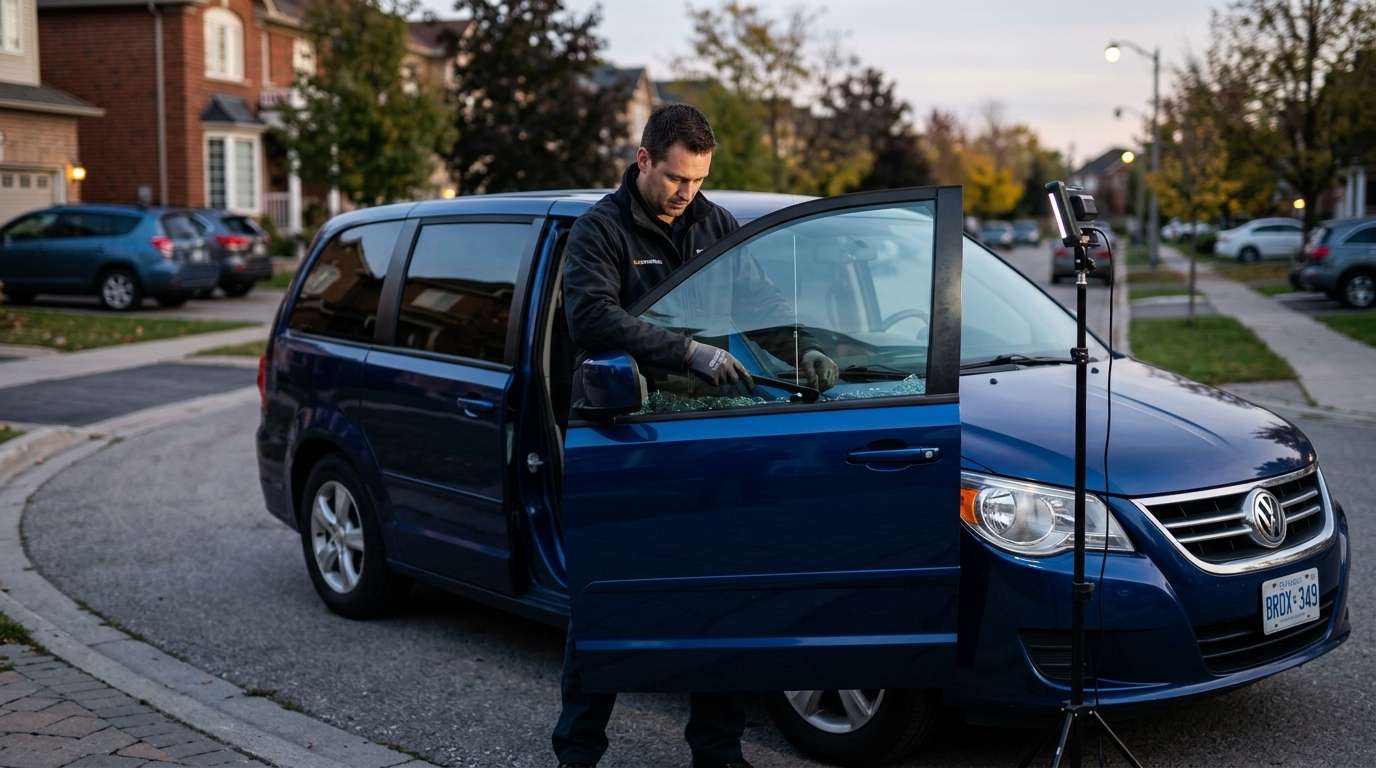
Framed Sashes and the RT Platform Glass Architecture
Working on the side glass of this minivan reveals its shared engineering under the skin: Volkswagen paired its own interior styling with Chrysler's RT minivan platform. The front doors use a rigid steel upper sash rather than a frameless design, meaning the glass stays fully guided inside heavy-duty rubber run channels all the way to the top of the frame. Because the front door glass carries no embedded antennas, rain sensors, or defroster lines, it relies entirely on a standard green solar tint to cut down heat soak inside the cabin.
Replacing the driver or passenger front drop glass involves disengaging the lift carrier brackets through dedicated service access holes in the inner module plate. If you drive an S, SE, SEL, or SEL Trim, the physical glass shapes remain completely identical across the lineup. The sliding side doors, however, differ significantly from traditional minivans by utilizing motorized roll-down glass finished in a deep factory privacy tint instead of stationary glass. On upper trims like the SEL Premium, the sliding door panel also integrates a manual pull-up sunshade that hooks directly into the upper window frame, which requires careful handling to unseat without damaging the shade roller mechanism.
| Glass Position | VW Reference Number | NAGS Reference | Factory Glass Tint |
|---|---|---|---|
| Front Left (Driver Side) | 7B0-845-301-A | DD11369 / FD11369 | Green Solar |
| Front Right (Passenger Side) | 7B0-845-302-A | DD11370 / FD11370 | Green Solar |
| Sliding Door Left | 7B0-845-305-A | DD11411 / FD11411 | Dark Privacy |
| Sliding Door Right | 7B0-845-306-A | DD11412 / FD11412 | Dark Privacy |
Regulator Failures and Run Channel Maintenance
The most frequent issue I encounter with these doors is not shattered glass from road debris, but glass that suddenly drops into the door shell. The cable-and-drum window regulator relies on plastic carrier clips to hold the tempered glass pane. Over years of thermal cycling, these plastic clips become brittle and snap, or the steel regulator cables fray and bunch inside the motor spool. When that happens, the glass falls unassisted into the door cavity, frequently chewing up the lower run channels or dislodging the horizontal outer belt weatherstrip (part 7B0-847-471-A on the left side).
When I replace the door glass, I back the glass itself with a one-year defect warranty while providing lifetime coverage on my own workmanship to ensure your window operates properly over the long haul. Alongside regulator hardware fatigue, electrical interruptions often masquerade as dropped or frozen glass. The wiring harness running through the accordion boot at the front door jamb is prone to wire fatigue and chafing, which can cut power between the master switch and the regulator motor even when the glass and mechanical tracks are completely intact.
Resolving Wind Whistle and Misalignment
Because the upper sash is a solid steel frame, any air gap between the tempered glass edge and the rubber channel results in a high-pitched wind whistle at highway speeds. Dried out or deformed glass run channels cause the safety glass to bind on the division bar post during upward travel, which can trick the regulator motor into stopping early or twisting the glass crooked. Reseating the replacement glass into the inner guide tracks with correct vertical pitch ensures an airtight seal along the top header and keeps the pane moving smoothly without straining the cable drive.


