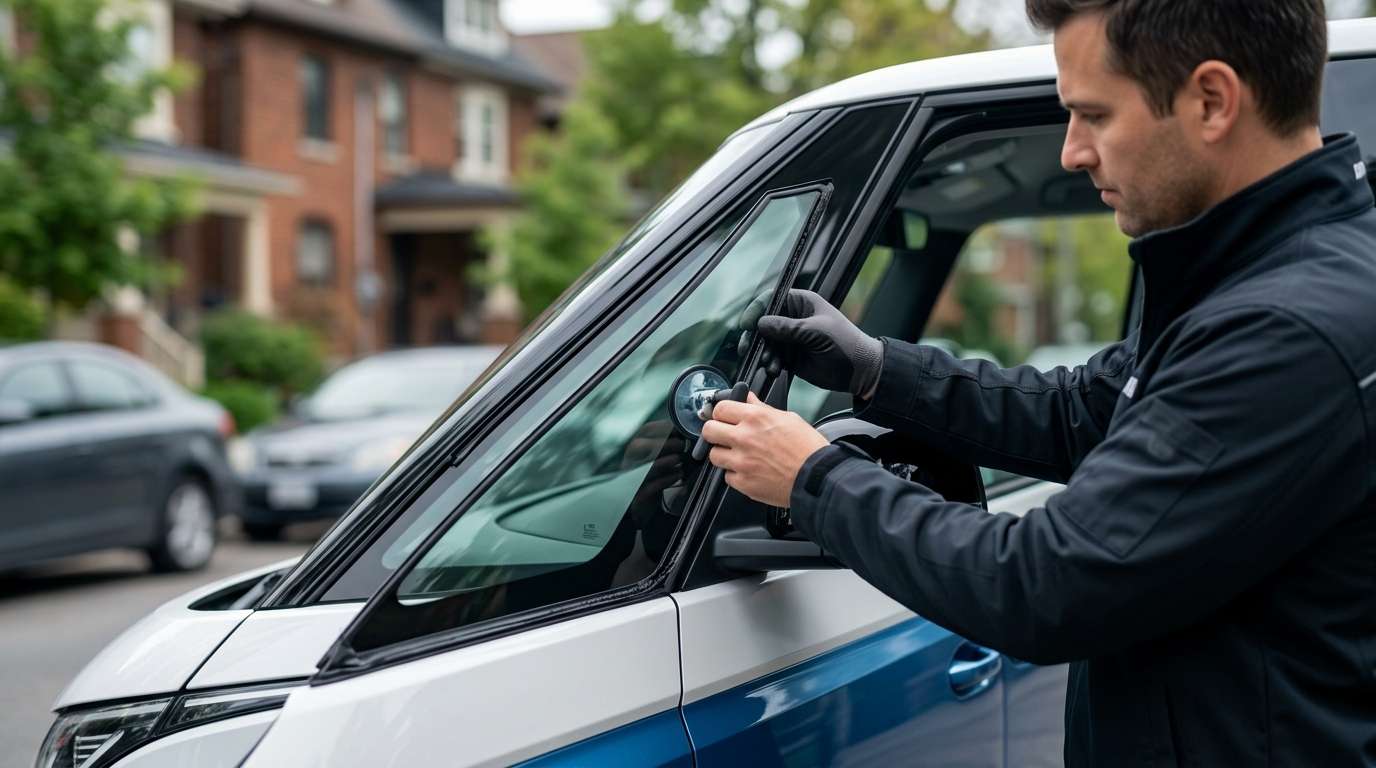
Sourcing and Fitting the ID. Buzz Front Door Vent Window
Replacing broken front quarter glass on the ID. Buzz presents a unique supply challenge across North American repair shops. Because this electric van is so new to Canadian roads, aftermarket inventory channels have not caught up, and standard NAGS part numbers for these triangular front door units remain unassigned in aftermarket catalogues. When a side impact or break-in shatters the glass, finding a matching replacement usually traces directly back to the Volkswagen warehouse logistics chain. The front-row fixed vent sits directly ahead of the movable side window, bonded directly into an encapsulated perimeter moulding that nests within the upper door frame channel.
The unit itself is entirely passive. It contains no embedded radio antenna grids, heating traces, or wiper de-icers, and all the front-facing driver assistance hardware remains sealed behind the main windshield rather than the door glass. Even so, proper seating is critical. ID. Buzz driver forums frequently discuss water ingress along the front doors and B-pillar seals during commercial touchless car washes; while the factory vent glass itself is not subject to a specific water-leak recall, an improper seal against the surrounding door frame will immediately amplify wind rush and cabin moisture issues.
ID. Buzz Door Frame Hardware and Part Numbers
The front quarter glass operates as a fixed partition in front of the main drop glass. Its trailing edge locks against a rigid vertical division bar guide channel that separates the quarter glass from the descending front door window. At the bottom forward point, the glass is flanked tightly by the exterior A-pillar applique and the high-mounted side mirror corner cover base.
| Component Position | Volkswagen Part Number | Glass Function |
|---|---|---|
| Driver Side (LH) Front Door | 1T3-845-411-C-NVB | Fixed encapsulated solar-control green unit |
| Passenger Side (RH) Front Door | 1T3-845-412-C-NVB | Fixed encapsulated solar-control green unit |
Getting the fit right against the vertical division bar requires stripping the inner door cards to access the lower channel anchors. I back every installation I complete on these doors with a lifetime guarantee on my workmanship alongside a one-year warranty covering the replacement glass itself. Because the electric drive unit is nearly silent at highway speeds, any misaligned division bar or distorted perimeter seal creates an immediate whistle right at ear level for front-seat occupants.
Cab Forward Visibility and Division Bar Geometry
Volkswagen designed the front door architecture of this MEB-platform van with deep quarter windows to recover forward diagonal sightlines past the thick front pillars. The glass features a factory solar-control green hue, matched to keep cabin solar gain low without the dark rear privacy tint seen behind the B-pillar.
- The leading lower edge meets the exterior mirror mount corner cover, requiring careful alignment so exterior air currents are not forced into the front door skin.
- The rear vertical division bar must maintain precise parallel spacing with the main roll-up glass so the power window motor does not bind or trigger auto-reverse pinch protection.
- Interior door trim panels must seat fully into their retaining clips upon reassembly to prevent vibration buzzes against the lower edge of the encapsulated vent frame.
Because the fixed vent glass cannot be adjusted independently once the encapsulated moulding sets into the door channel, alignment with the division bar and the A-pillar corner trim must be exact from the moment it is seated.


