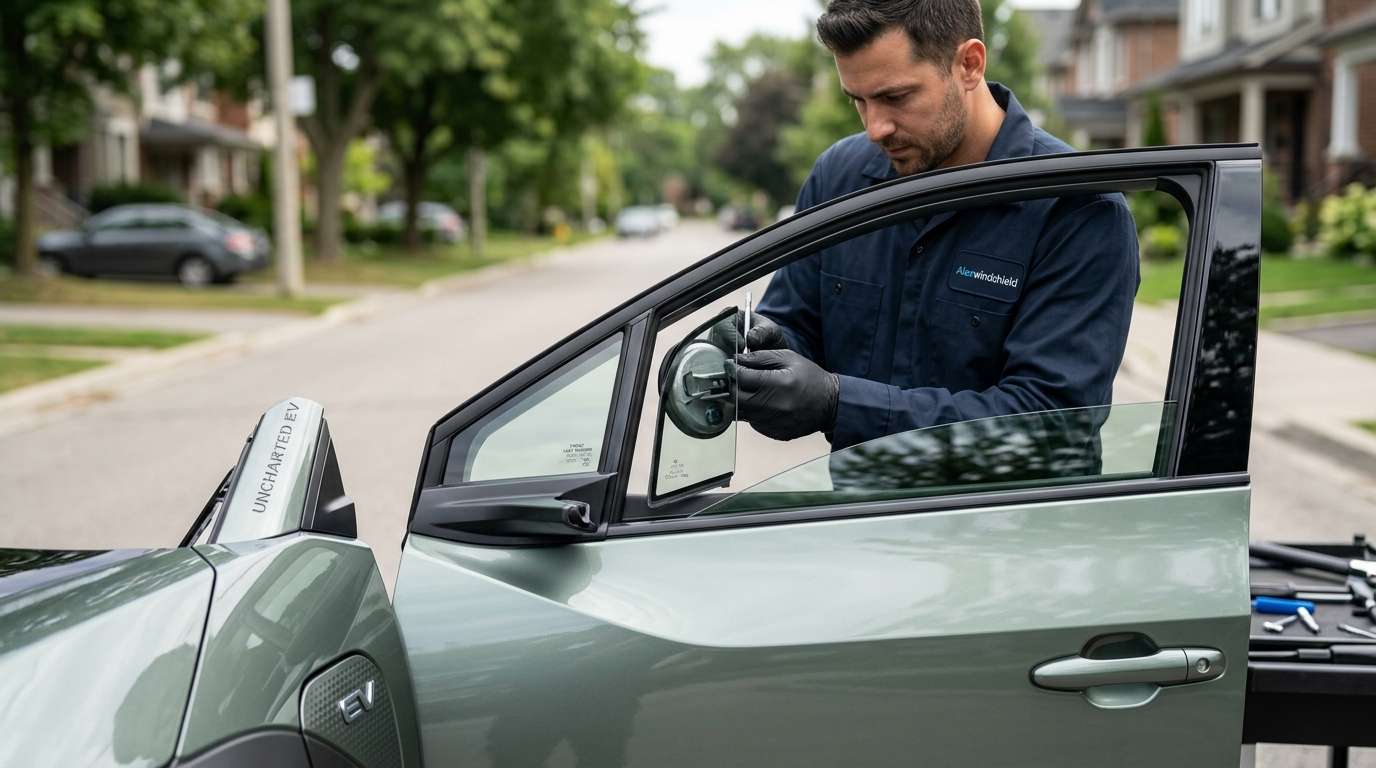
Shattered Door Vent Panes and Broken Quarter Glass
Small side glass is often targeted by smash-and-grab thieves who mistakenly assume a small triangular window costs less to repair or will avoid triggering cabin perimeter sensors. On this electric crossover, smashing the front door vent glass gives direct reach to the manual interior door latch, bypassing the framed window run. Because the vehicle uses a framed door architecture rather than frameless glass, a break-in often bends the vertical division channel bar or tears the black rubber encapsulation moulding that secures the glass to the front door frame.
Rear side quarter vent glass suffers different hazards on the road. Tucked into the C-pillar just ahead of the rear tailgate, these fixed panels sit directly in the line of high-velocity stone strikes thrown up by passing utility trucks on unpaved gravel routes. When a stone catches the exposed edge near the exterior pillar appliqués, the tempered panel shatters instantly into hundreds of small pebble-sized fragments that fall inward behind the rear quarter interior trim panels.
Framed Division Channels and Body Glass Variations
Replacing the stationary glass on this vehicle requires matching the factory tint transitions across different trim levels. The side glazing specs change depending on how the electric crossover was optioned from the factory:
- Front Door Vent Glass: Both the Base and Models share standard solar-control green-tint glass ahead of the main roll-down window, seated inside the vertical division bar adjacent to the A-pillar interior cover garnish.
- Rear Quarter C-Pillar Glass: Base and Trims retain light solar-control glass, whereas the Sport and GT trims receive deep factory dark-tinted privacy glass on all panels behind the B-pillar.
- Roof Clearance: While the GT trim carries a panoramic fixed glass roof with an electric sunshade, that overhead panel remains structurally isolated from the quarter glass channels and does not interfere with the side window mounting surfaces.
When sourcing replacement inventory, I supply aftermarket glass manufactured by established producers like XYG, Pilkington, FYG, and PGW rather than factory dealer units. These aftermarket units match the exact thickness of the original factory glass, which is vital for maintaining a tight seal against the exterior rubber moulding and preventing the highway wind rush that early owners have reported near the front division channel.
| Glass Location | Base / Trims | Sport / GT Trims | Hardware Surround |
|---|---|---|---|
| Front Door Vent | Solar-Control Green | Solar-Control Green | Metal division bar & rubber seal |
| Rear C-Pillar Quarter | Solar-Control Clear/Green | Dark Privacy Tint | Exterior gloss or matte appliqué |
Addressing Wind Rush Around the Division Bar
Because the front vent glass sits directly ahead of the movable door glass, its alignment inside the framed door sash dictates the acoustic seal of the cabin. If an impact shifts the vertical division channel bar, air forces its way through the rubber encapsulation at highway speeds. Electric drivetrains produce virtually zero engine noise to mask exterior sounds, making any whistling or air leakage around the A-pillar garnish immediately obvious inside the vehicle. Correct seating of the glass inside the metal channel ensures the seal sits flush against the adjacent drop glass without pinching the power window track.
Do these vent panels house radio antennas or defroster lines?
No. Neither the front door vent glass nor the fixed rear quarter glass contains integrated radio antenna elements, keyless entry receivers, or defroster grid wires. Those electronic components are isolated to the rear hatch glass and the windshield.
Can broken glass damage the front power window track?
Yes. If the front triangular vent glass breaks inward, fragments can slip behind the interior door card upper trim garnish and drop into the lower door cavity. If these shards fall into the lower run channel of the roll-down window, they can scratch the main glass or bind the window regulator mechanism until the bottom of the door shell is cleaned out.


