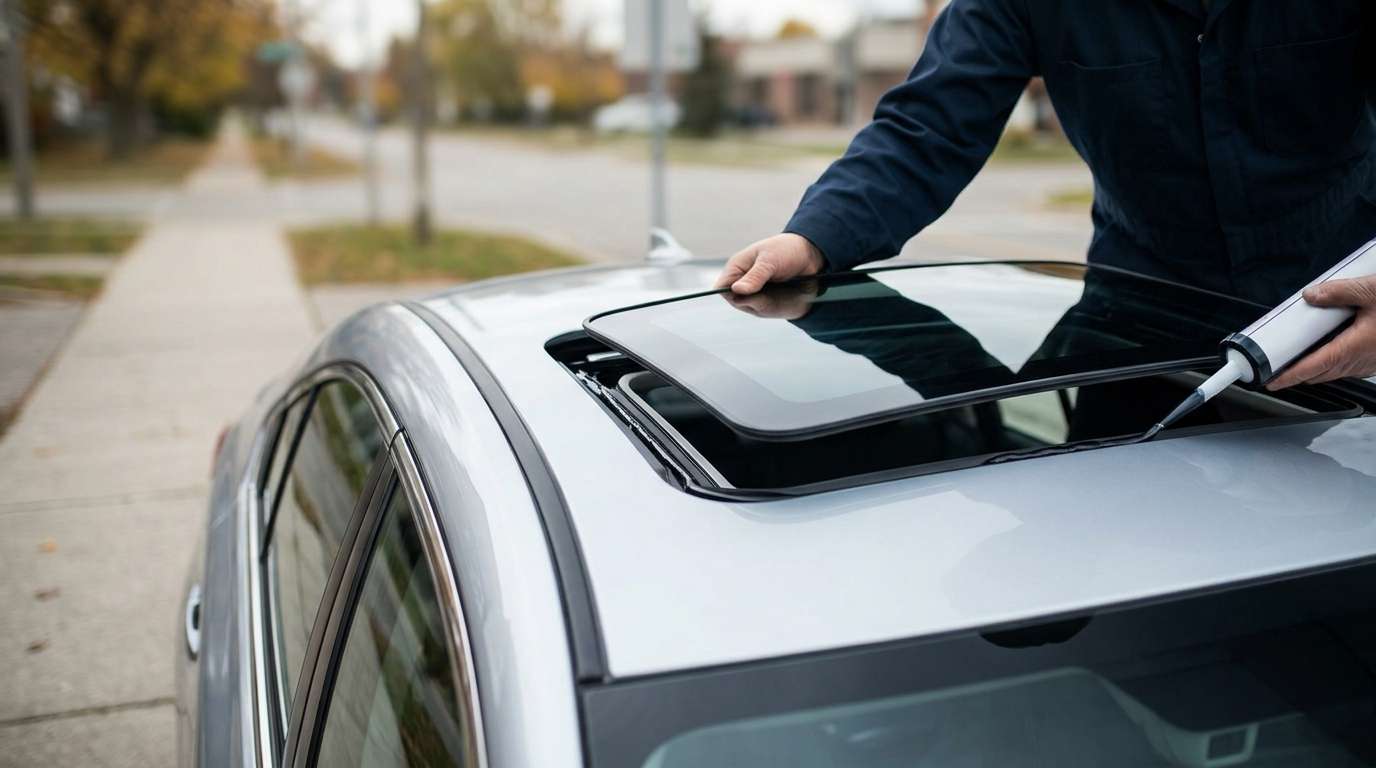
Replacing Shattered Moonroof Glass on Your Legacy Sedan
When the single-pane moonroof glass on your Legacy sedan shatters from road debris or sudden impact, the immediate concern is keeping cabin damage to a minimum. The factory assembly, cataloged under dealer part number 65430AL00A, is a standalone tempered glass unit rather than a panoramic setup. Because this panel is tinted tempered glass, it fractures into thousands of small, blunt pebbles rather than sharp shards. While the black ceramic frit perimeter band and encapsulated carrier frame retain some fragments, the drop-down debris often falls directly onto the interior sliding sunshade or into the cassette tracks.
Replacing this glass does not involve disturbing the windshield or roof structural panels, but it does require careful alignment with the roofline. Four Torx bolts—two on the left guide bracket and two on the right—anchor the encapsulated assembly to the mechanical tilt-and-slide carriage. If these brackets are uneven during replacement, wind noise will bleed past the rubber rim seal at highway speeds, and the panel can bind against the painted steel roof skin.
Mechanical Snaps, Motor Sync, and Water Channels
Owners of the 2.5i, Sport, and 3.6R trims often notice roof noises even before glass damage occurs. Subaru addressed a common popping or snapping sound heard during roof flexing or initial tilt through Technical Service Bulletin 15-226-18. When replacing the glass, I verify that the mechanism brackets are tracking smoothly without catching on the front pop-up composite wind deflector arms, which spring upward whenever the panel slides back.
I back every replacement with a full year of coverage on the glass panel itself alongside lifetime protection on my workmanship, ensuring that the perimeter encapsulation and mechanical alignment hold firm against weather and road vibration. If your vehicle recently suffered a dead battery while parked with broken glass, the forward sunroof motor—located near the overhead sunglasses console and map lights—often loses its position logic. A quick manual toggle cycle resets the auto-open travel limits so the drive cables pull the glass flush against the outer roof stampings.
Water leaks after a break are almost never caused by the replacement glass itself failing to seal out moisture completely. Sunroof systems are designed to let small amounts of water bypass the outer rubber bead into four internal drainage troughs. If shattered tempered glass particles wash down the tracks, they can plug the front rubber drain hoses routed through the A-pillars, forcing water to spill over the cassette edges onto the molded headliner or down into the front carpet footwells. Clearing the cassette tray before seating the new panel ensures those pathways stay open.
What to Verify After Moonroof Panel Replacement
- Inspect the rubber rim weatherstrip around the perimeter to verify it sits completely flush with the surrounding roof sheet metal without puckering or dips.
- Check that the interior manual sunshade glides freely beneath the glass along its lower cassette rails without grinding against loose glass debris.
- Operate the tilt function and watch the front composite wind deflector to ensure its spring-loaded arms fold down smoothly as the glass seals shut.
- Test both express open and express close from the roof switch console to confirm the electric motor maintains its travel memory without reversing unexpectedly.
- Pour water along the side channels with the glass open to verify liquid flows directly through the A-pillar and C-pillar drain hoses instead of pooling inside the cassette frame.


