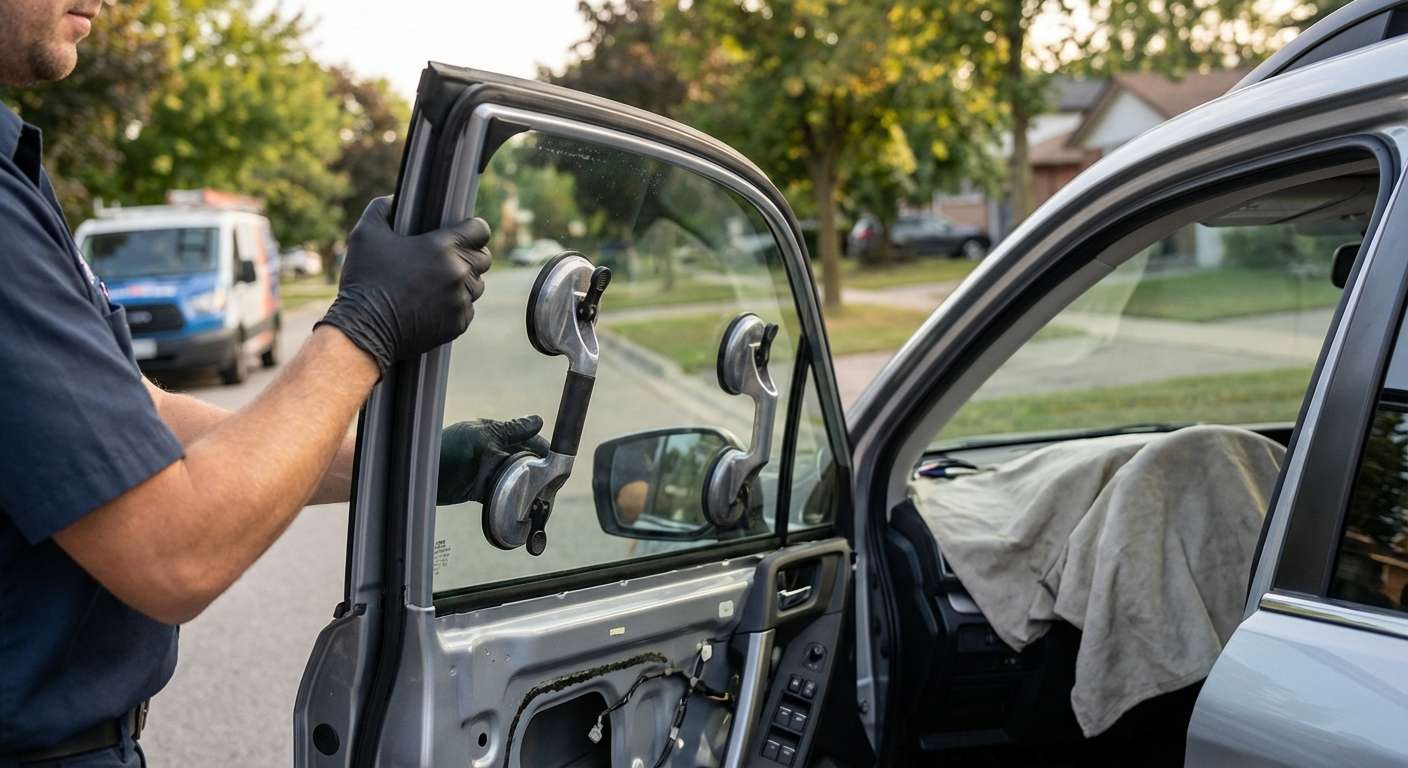
Vulnerabilities of the Framed Windows on SJ Foresters
Break-ins targeting the front side glass remain the primary reason drivers contact me for a replacement on this vehicle, usually shattering the driver pane to access the cabin. Unlike earlier generations of the Forester that used frameless glass, this body style relies on a full window sash that houses a distinct division bar separating the main roll-down window from the forward mirror corner gusset. When that tempered side pane breaks, it shatters into thousands of blunt fragments that collapse down into the bottom of the door shell, frequently jamming the lower horizontal tracks of the window regulator.
Another common mechanical issue stems from dirt and road grit building up inside the deep vertical rubber glass run channel. When friction increases along the run channel, the power window motor labours, causing the anti-pinch safety mechanism to misread the drag as an obstruction and automatically reverse the glass downward. Road vibration also tends to work the bottom bracket bolts loose where the glass secures to the regulator scissor arms, producing an annoying rattle when the door is closed or while driving over gravel tracks.
Distinguishing Glass Options Across Forester Trims
Matching the replacement glass to your exact trim level requires checking the factory tint depth. Every front door panel on this production run uses standard UV-cut green solar-absorbing glass, but the rear passenger doors vary significantly depending on whether the vehicle is a base model or a higher trim level. The base 2.5i came equipped from the factory with clear green solar glass on the rear doors, whereas Premium, Limited, and Touring trims left the factory with dark privacy glass.
Whenever I replace side glass on these vehicles, I supply aftermarket glass manufactured by established glassmakers such as PGW, Pilkington, FYG, or XYG to match the original solar tint and fitment. The table below lists the industry NAGS identifiers alongside the corresponding Subaru dealer reference numbers for each door position.
| Door Position | Glass Tint Type | NAGS Number | Subaru Part Reference |
|---|---|---|---|
| Front Left (Driver) | Green Solar | FD25857 GTYN | 61011SG010 / 61011SG011 |
| Front Right (Passenger) | Green Solar | FD25856 GTYN | 61011SG000 / 61011SG001 |
| Rear Left (Base Trims) | Green Solar | FD25859 | 62011SG010 |
| Rear Right (Base Trims) | Green Solar | FD25858 | 62011SG000 |
| Rear Left (Upper Trims) | Privacy Dark Tint | FD25859 | 62011SG030 / 62011SG031 |
| Rear Right (Upper Trims) | Privacy Dark Tint | FD25858 | 62011SG020 / 62011SG021 |
Hardware Alignment, Gusset Seals, and Regulator Mounting
Getting a replacement door pane to seat correctly requires careful attention to the vertical division bar channel and the mirror gusset seal. The front door glass does not contain embedded electrical circuits, radio antennae, or heating grids—those components are isolated to the rear tailgate and windshield on the SJ platform. Instead, the pane relies solely on mechanical alignment through two bolt-through bottom brackets clamped onto the regulator lift plate.
A frequent problem area on these doors is the triangular rubber gusset seal sitting directly inward of the side mirror assembly. If the front edge of the glass is not guided precisely into the vertical division channel during reassembly, high-speed wind can pull the rubber away from the glass frame, generating a loud whistling noise at highway speeds. Ensuring the inner and outer belt moulding weatherstrips sit flush against the bottom edge of the glass prevents water leaks into the door cavity, while keeping the glass firmly seated eliminates the sash buzzes that many Forester drivers experience.


