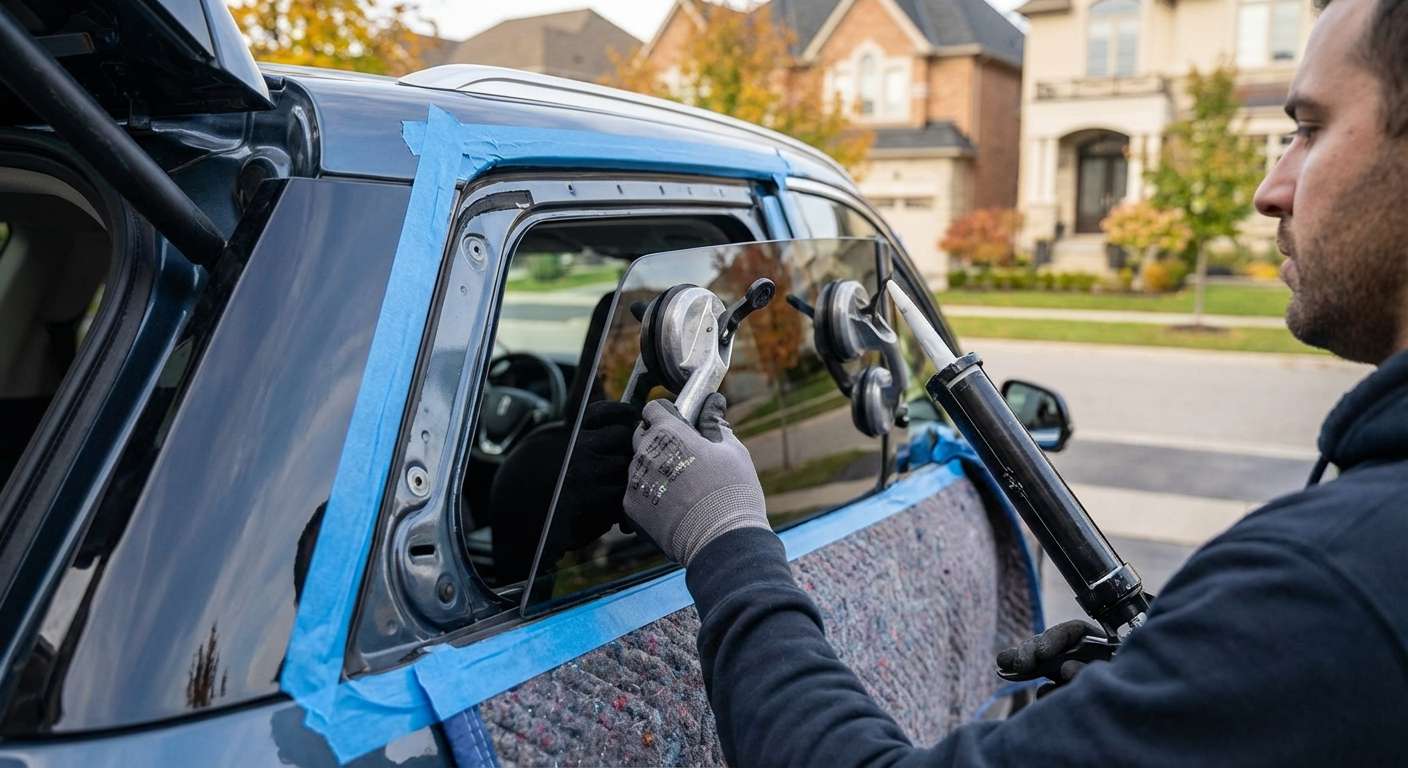
Rear Door Vent Glass Versus Body Quarter Glass on the Aviator
When glass breaks behind the rear passenger seat on this vehicle, confusion often arises in parts ordering because collision diagrams separate the rear door assembly from the cargo area body. The stationary triangular pane sits directly inside the fully framed rear door structure, separated from the lowering main window by a structural vertical division bar. This is cataloged under Ford base engineering numbers like the LC5Z-7825767 series, differing completely from the bonded rear quarter glass that sits farther back along the cargo compartment and carries the integrated telematics and radio antenna grid. While both sections come factory-equipped with acoustic laminates and heavy privacy tinting across trims like the Premiere, Reserve, and Black Label, they mount to entirely different substrates.
Managing the Division Bar and Piano Black Exterior Appliques
Servicing the rear door vent window requires taking down the interior door trim panel to release the lower fasteners of the vertical division channel. Lincoln wraps the exterior door frames and C-pillars in high-gloss piano black applique mouldings that sit flush with the window weatherstripping. These gloss panels scratch under the slightest lateral pressure if tools pry against them, requiring full isolation before loosening the division bar screws. Once the bar is unbolted, it must tilt forward into the door cavity to free the encapsulated perimeter seal holding the vent window in its channel, all while clearing the operational drop glass tracks.
Whenever I replace this pane, I rely on trusted aftermarket manufacturers like Pilkington, PGW, FYG, and XYG to ensure the factory-matched deep privacy tint and edge encapsulation seat seamlessly into the Lincoln frame. Getting that alignment right is critical: an improperly seated vertical divider causes the power window safety logic to bind. When the rising main glass encounters excessive friction against a misaligned division seal, the anti-pinch sensor triggers an auto-reverse sequence, bouncing the window back down into the door.
Addressing Wind Rush and Weatherstrip Sealing Issues
The Aviator has known cabin noise vulnerabilities linked to air leaks around the rear door seals and division bar runs. Because the rear vent pane relies on integrated rubber channel encapsulation rather than direct urethane bonding, the vertical run channel must sit fully seated against the division bar web. Any twist in the run channel allows air buffeting at highway speeds, which compromises the sound-dampening acoustic glass profile Lincoln designs for these cabins. The inner foam weatherstrips and lower fastener isolators must return to their exact factory depth so the channel maintains constant, even clamping force against the leading edge of the fixed glass.
Does the rear door vent glass include defroster elements or antennas?
No. Defroster grids on this vehicle are exclusive to the fixed rear liftgate back window. The integrated antenna grids for radio reception and telematics modules are embedded strictly in the cargo-area body quarter glass, leaving the rear door vent window entirely passive.
Can the stationary door vent pane be replaced without taking off the inner door panel?
No. The fixed glass is held captive by the vertical division bar that guides the main operable drop window. The lower mounting hardware securing that division bar is concealed behind the inner door card, vapor barrier, and speaker bracket assembly, requiring complete interior panel removal to release the glass from its channel.


