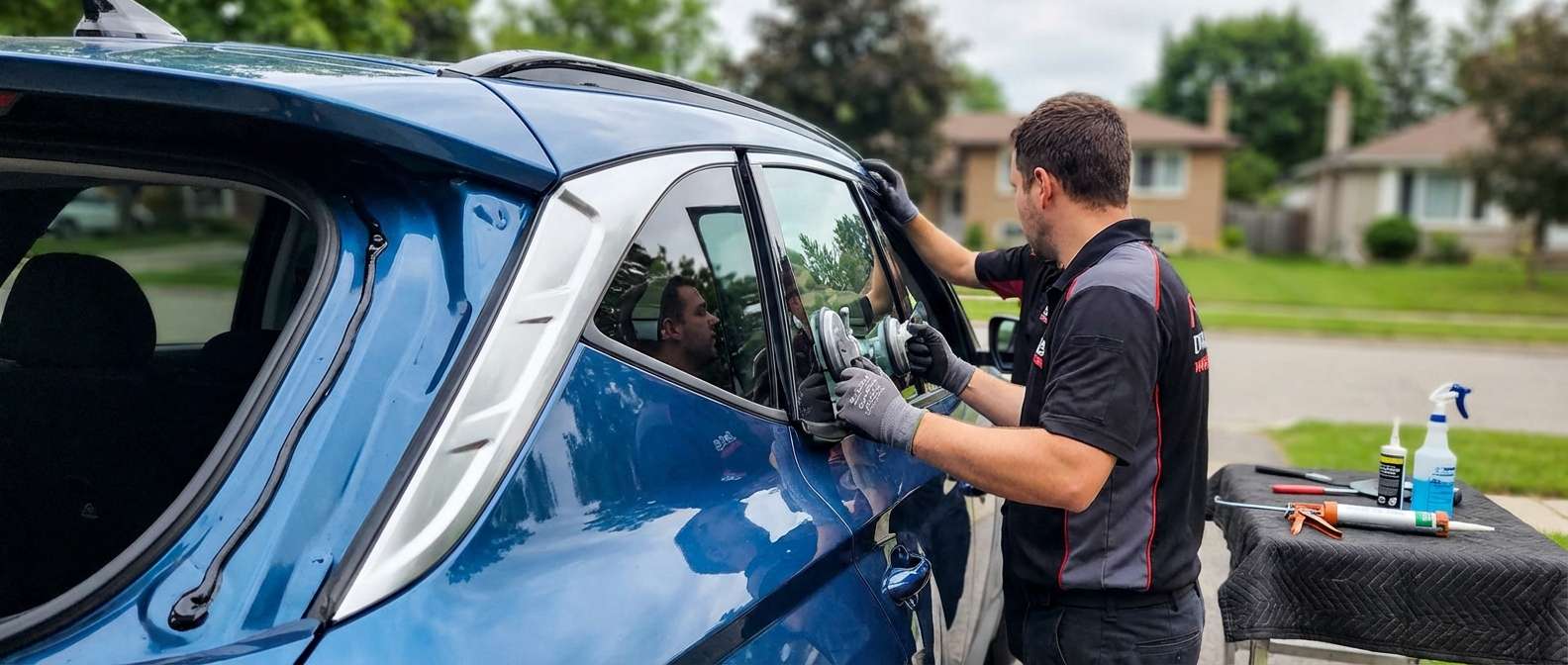
Vulnerabilities and Trim Variations on the Tucson Quarter Window
Thieves frequently target the stationary rear quarter glass on this vehicle to gain quiet entry into the cabin without setting off standard shock sensors, smashing through the tempered glass to reach the mechanical cargo release. Because the quarter window sits between the C-pillar and the dramatic geometric D-pillar applique (OEM reference 87850-N9000 on the left side), any forced break-in usually damages the delicate exterior plastic garnishes alongside the glass.
Matching the replacement unit involves identifying the specific exterior styling package of your Tucson. Entry-level SE trims feature light green solar tint, whereas the SEL, rugged XRT, sporty N Line, and upscale Limited variants all require dark factory privacy tint. Furthermore, the upper beltline moulding integrated directly onto the glass assembly varies by trim level: standard editions incorporate a distinct satin chrome accent strip, while N Line and black-accent packages utilize a high-gloss black finish. When ordering aftermarket replacements, ensuring the moulding style matches the vehicle profile prevents unsightly mismatches with the roof rail lines.
Interior Access, Hardware, and Pillar Clearance
Replacing this window requires taking down the interior cargo area side quarter trim panels. Hyundai engineered this panel with integrated mechanical alignment studs that penetrate the vehicle body flange and anchor with retaining nuts from the inside, rather than relying exclusively on a glued bond. When glass breaks, tempered fragments fall directly behind the cargo sheet metal and nestle into wiring channels beside the rear wheel wells, requiring thorough cleanup behind the interior liner.
This side of the cargo area also shares space with the rear side curtain airbag assemblies, which were subject to a factory recall regarding deployment clearance against internal pillar trim. Ensuring the interior panels and alignment studs seat into the body without snagging the curtain airbag path is essential. If you are dealing with a shattered window after a break-in, I can usually be at your driveway roughly an hour after your booking to secure the vehicle and handle the job.
Preventing Post-Service Whistling and Water Leaks
The aerodynamic styling of the rear pillars makes this model particularly sensitive to wind turbulence. If a replacement window does not rest entirely flush with the rear door shut-face and the exterior D-pillar trim, air catches the leading edge and generates an annoying high-pitched whistle at highway speeds. A loose fit can also compromise the moisture seal around the ceramic frit band, leading to damp cargo floors.
Post-Installation Owner Checklist
- Verify that the exterior moulding along the top edge—whether satin chrome or gloss black—aligns seamlessly with the trim running across the rear passenger door and upper roof rail.
- Press gently on the rear D-pillar applique beside the glass to confirm all mounting clips snapped back securely without gaps.
- Inspect the tint shade from the outside to ensure the privacy level matches the opposite factory quarter panel and the rear door drop glass.
- Take the vehicle up to highway speeds and listen closely around the C-pillar for whistling, fluttering, or excess wind rush.
- Examine the interior cargo plastic trim below the glass to ensure the panels sit flush against the sheet metal with no loose retaining clips.


