The Third-Generation Evolution: 2016-2022 Honda Pilot Quarter Glass Dynamics
The third-generation Honda Pilot (2016-2022) completely redefined the bulky, boxy frame of its predecessors, transforming into a sleek, aerodynamic, and highly efficient family SUV. A critical architectural element of this modern silhouette is the rear quarter glass. Wrapping elegantly toward the D-pillar, this specialized auto glass does much more than provide natural light for third-row passengers; it contributes directly to the vehicle's structural rigidity, aerodynamics, and blind-spot visibility. When this glass is shattered by vandalism, debris, or a collision, it instantly compromises the safety, weatherproofing, and security of your vehicle. Replacing it requires far more than just "slapping on a new piece of glass"—it demands the precision, chemical expertise, and rigorous technical protocols of a Master Technician.
Premium Mobile Quarter Glass Replacement Across the Greater Toronto Area (GTA)
Driving a Honda Pilot with a shattered quarter window is not only a massive security risk but also exposes your luxurious interior to unpredictable Canadian weather. At AlexWindshield, we understand that your time is valuable. That is why we bring our master-level auto glass replacement directly to your driveway, workplace, or fleet lot. Our fully equipped mobile service vehicles operate extensively across the Greater Toronto Area (GTA), with specialized dispatch routes ensuring rapid response times in Vaughan, Richmond Hill, and Markham.
Whether you are parked at a corporate plaza in Markham, a residential driveway in Vaughan, or a shopping center in Richmond Hill, our mobile technicians arrive with the exact OEM-equivalent encapsulated quarter glass designed specifically for the 2016-2022 Honda Pilot. We bring the auto glass shop to you without compromising a single technical standard.
Understanding the 2016-2022 Honda Pilot Quarter Glass
Before diving into the replacement procedure, it is vital to understand the engineering behind the 2016-2022 Honda Pilot's rear quarter glass. Unlike older models where glass was simply held in by rubber gaskets, the third-generation Pilot utilizes an encapsulated bonded glass system. This means the glass comes pre-manufactured with a specialized plastic and rubber molding permanently attached to its edges. Furthermore, it is fixed to the vehicle's body using high-tensile polyurethane adhesive. Because rear quarter glass is typically made of tempered glass (unlike the laminated windshield), an impact will cause it to shatter into thousands of small, granular pieces to prevent deep lacerations. This characteristic makes the cleanup and preparation phase just as critical as the installation itself.
Master Technician A-to-Z Replacement Process for the Honda Pilot
At AlexWindshield, we follow a strict, multi-point protocol to ensure a factory-perfect, leak-free installation. Here is our meticulous, step-by-step process for replacing the quarter glass on your 2016-2022 Honda Pilot.
Step 1: Vehicle Assessment, Interior Protection, and Extensive Vacuuming
Because the quarter glass is tempered, a break results in thousands of glass shards scattering throughout the third-row seating, cargo area, and deep into the interior quarter panels. Our first priority is containment and safety.
- Interior Masking: We lay down heavy-duty protective blankets over the Honda Pilot's third-row seats, cargo floor, and exterior paint below the window frame to prevent accidental scratching.
- Initial Vacuuming: Using industrial-grade HEPA shop vacuums, we meticulously extract all loose glass from the seats, floor mats, and cargo tracks.
- Exterior Taping: We tape off the exterior body panels surrounding the glass cavity to protect your clear coat during the extraction process.
Step 2: Interior Cargo Trim and Pillar Panel Removal
To access the bonding area and the retaining nuts/clips of the Honda Pilot's encapsulated quarter glass, we must work from the inside out.
- Trim Disassembly: We carefully use non-marring nylon pry tools to unclip and remove the D-pillar and C-pillar interior trim panels. We also loosen the lower side cargo panel.
- Hardware Extraction: The 2016-2022 Pilot quarter glass features locating pins and securing nuts accessible only from behind these interior panels. We remove these fasteners carefully to free the structural hold of the glass.
- Deep Vacuuming: With the interior panels removed, we expose the inner body cavities. We perform a secondary, deep vacuuming to ensure every single hidden glass shard is removed. Leaving shards behind can cause annoying rattles while driving and poses a safety hazard.
Step 3: Removing the Old Urethane and Encapsulation
Even with the glass shattered, the outer frame and the factory polyurethane adhesive remain stubbornly fused to the vehicle's pinch weld.
- Urethane Cutting: We utilize advanced wire-cutting systems (such as an Equalizer tool) or a cold knife to slice through the original bead of factory urethane adhesive from the outside.
- Frame Removal: Once the urethane is severed, we safely pull the remaining encapsulated molding and broken glass frame away from the vehicle body.
Step 4: Pinch Weld Preparation and Decontamination
The structural integrity of the new quarter glass depends entirely on the condition of the vehicle's pinch weld (the metal frame where the glass sits).
- Urethane Trimming: We use specialized scraper blades to pare down the old urethane bead to a precise 1-2 millimeter base. New urethane bonds best to a thin layer of clean, existing urethane.
- Chemical Cleaning: We clean the entire pinch weld and surrounding body utilizing an alcohol-based, lint-free preparation solvent. This removes any dirt, road grime, wax, or natural oils left by the technician's hands.
Step 5: Primer Application and Corrosion Prevention
During the cutting process, it is common for tiny micro-scratches to occur on the pinch weld. Ignoring these can lead to severe rust issues down the line.
- Bare Metal Priming: We apply a highly specialized, active anti-corrosion auto glass primer to any exposed bare metal on the pinch weld. This seals the metal and guarantees zero rust formation.
- Glass Preparation: We inspect the new, OEM-equivalent Honda Pilot quarter glass. We apply a glass prep/primer to the frit band (the black painted edge of the glass) to promote absolute chemical adhesion with the urethane.
Step 6: High-Quality Urethane Adhesive Application
The adhesive is the lifeblood of the installation. We never compromise on the quality of our bonding agents.
- V-Bead Extrusion: Using a professional-grade powered caulking gun, we extrude a continuous, uniform "V-shaped" bead of premium, fast-curing polyurethane adhesive directly onto the pinch weld.
- Seamless Connection: We ensure there are no gaps, overlaps, or air pockets in the urethane bead, which is the primary defense against water leaks and wind noise.
Step 7: Precision Glass Installation and Alignment
The Honda Pilot’s rear quarter glass must align perfectly with the rear hatch gaps and the C-pillar.
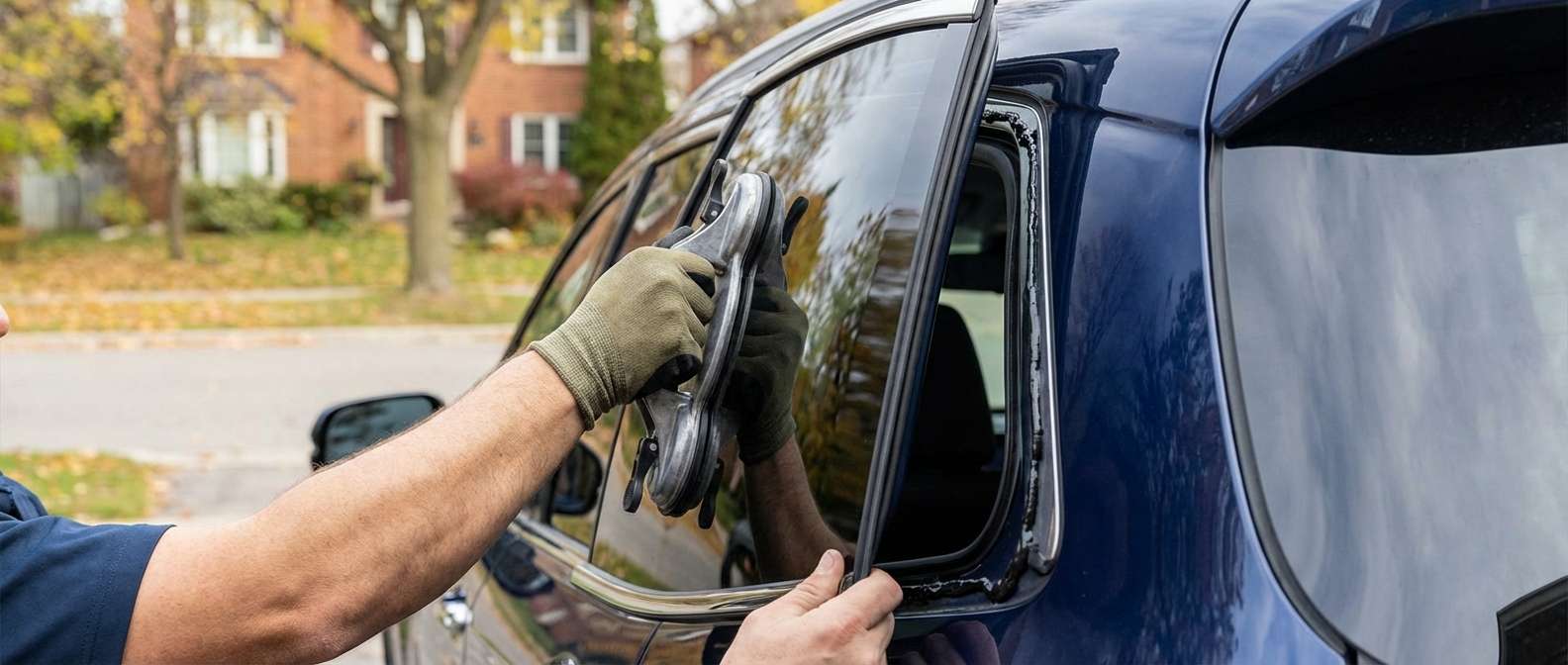
- Setting the Glass: Utilizing heavy-duty suction cups, our Master Technician carefully lifts the new quarter glass and aligns the factory locating pins with the corresponding holes in the vehicle's body.
- Compression: We gently but firmly press the glass into the fresh urethane bead, ensuring the encapsulated molding sits flush and tight against the vehicle's exterior bodylines.
- Securing Hardware: Moving to the interior, we reinstall and torque the securing nuts to the locating pins, pulling the glass firmly into its final cured position.
- Retention Tape: We apply specialized, non-residue retention tape to the exterior of the glass and body to hold the exact alignment while the urethane begins its flash-curing process.
Step 8: Reassembly, Curing Time, and Final Cleanup
The installation is not complete until your Honda Pilot is returned to its factory-fresh interior state.
- Interior Reassembly: We carefully reinstall the lower cargo panels, the C-pillar trim, and the D-pillar trim, ensuring all clips snap perfectly into place without gaps.
- Final Polish: We wash and polish the new quarter glass with ammonia-free automotive glass cleaner, ensuring perfect clarity.
- Safe Drive Away Time (SDAT): We inform the customer of the specific SDAT required for the urethane to cross-link and cure. Thanks to our premium adhesives, this time is typically reduced to just 30 to 60 minutes, getting you back on the road safely and quickly.
Why Choose AlexWindshield for Your Honda Pilot?
Replacing the quarter glass on a complex, modern SUV like the 2016-2022 Honda Pilot requires deep technical knowledge of automotive interiors, specialized urethane chemistry, and an unwavering commitment to safety. Trusting an amateur can result in massive water leaks, electrical damage to your interior, and severe rust degradation of your vehicle's frame.
At AlexWindshield, we are the recognized experts in auto glass integrity. By choosing us, you are guaranteed:
- Unmatched Convenience: Comprehensive mobile auto glass service directly to your location anywhere in the GTA, with rapid dispatch to Vaughan, Richmond Hill, and Markham.
- Master Technicians: Your vehicle is serviced only by certified, highly trained technicians who understand the specific dismantling and bonding requirements of the Honda Pilot.
- OEM-Quality Materials: We use only factory-equivalent encapsulated auto glass and premium-grade urethane adhesives that meet or exceed original Honda safety standards.
- A Lifetime Warranty: We stand behind our craftsmanship. Every quarter glass installation we perform is backed by our comprehensive Lifetime Warranty against air leaks, water leaks, and manufacturer defects.
Don't let a shattered quarter window disrupt your family's schedule or compromise your vehicle's safety. Experience the pinnacle of automotive glass repair. Contact AlexWindshield today to schedule your mobile Honda Pilot quarter glass replacement and drive with absolute confidence.


