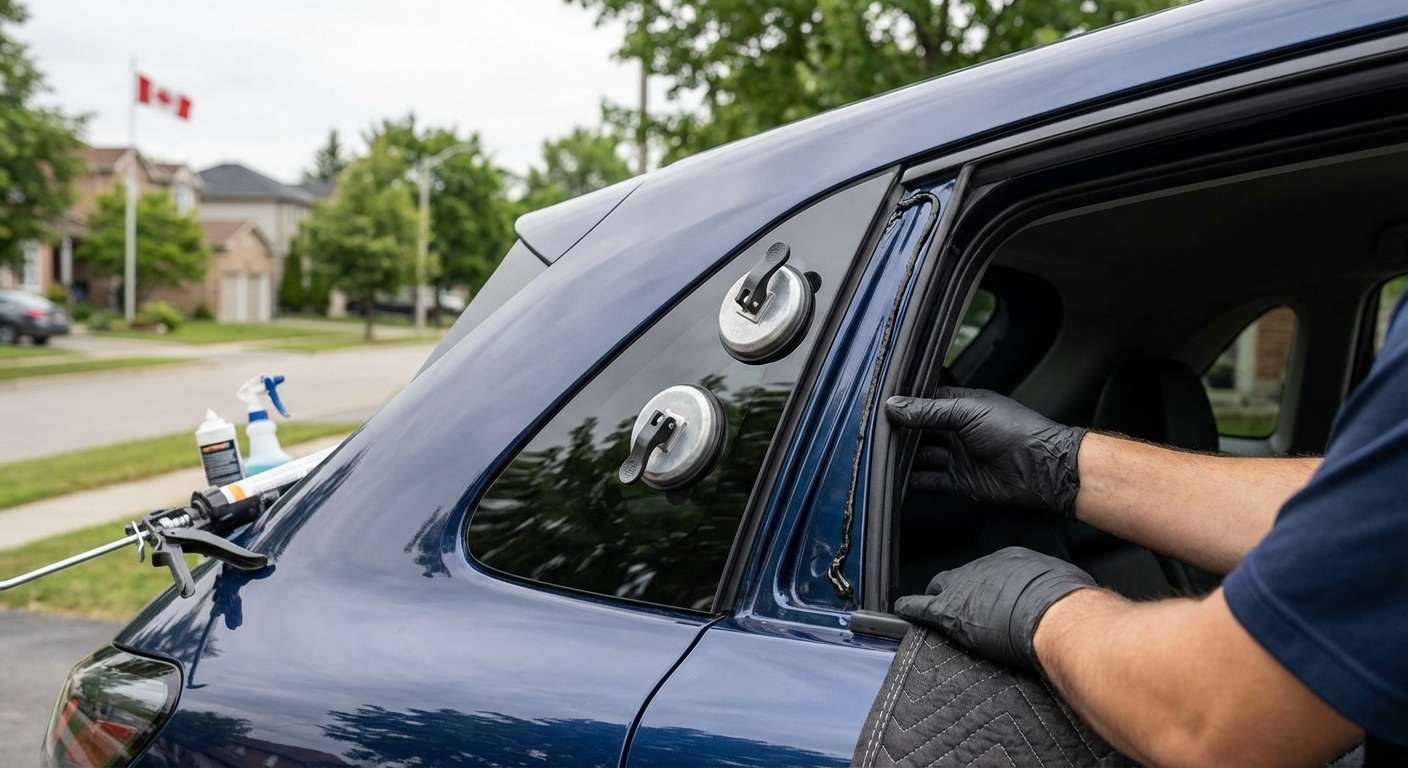
Replacing Rear Cargo Area Glass on the Redesigned HR-V
When the rear side window behind your back door breaks, sorting out the correct replacement comes down to matching your specific trim level's tint. Honda moved away from the hidden pillar door handles of the previous iteration and relocated the door latches down into the sheet metal, giving this glass an uninterrupted run straight from the rear passenger window frame back to the tailgate aperture. The glass itself is a stationary, urethane-bonded piece edged with wide ceramic frit masking that shields the structural adhesive from ultraviolet light, and it does not carry integrated radio grid antennas or defroster lines.
Matching the replacement glass requires checking whether your vehicle is a base LX or one of the higher-tier Sport or EX-L builds. The LX uses clear-green solar glass, whereas the Sport and EX-L trims leave the factory with deeply dyed dark privacy glass. For every replacement I carry out, I supply aftermarket quarter windows produced by manufacturers like Pilkington, PGW, FYG, or XYG to match the solar control and shade percentage of your intact factory glass without relying on dealership stock. While Honda parts catalogs reference base part numbers 73551-3W0-305 for the left driver side and 73501-3W0-305 for the right passenger side, high-grade aftermarket units precisely replicate the curve and ceramic band of these factory panels.
Interior Access and Single-Use Perimeter Hardware
Properly clearing a shattered quarter window requires dismantling the rear cabin plastics rather than simply working from the exterior. I pull the luggage compartment side trim and disconnect the C and D-pillar interior moldings because the glass sits over interior alignment pins that guide its position against the aperture. Accessing the inner cavity also ensures I can vacuum up tempered glass granules that drop past the interior lip into the quarter panel void, which would otherwise rattle over rough roads indefinitely.
The surrounding exterior hardware cannot simply be popped off and reused. Honda designs the front perimeter reveal moldings and glass seals—cataloged as 73860-3W0-A01 on the driver side and 73810-3W0-A01 on the passenger side—along with surrounding reveal clips like 91536-SS0-J01, as non-reusable items. Once bent or released during the extraction of broken glass, these plastic retaining clips lose their tension, and the bonded rubber seals will no longer sit flush against the sheet metal. Fresh perimeter hardware ensures the weatherstrip maintains a tight seal against exterior wind noise and highway rain.
Distinguishing Hatch Glass Breakage from Side Window Damage
A number of owners look closely at their side glass after hearing reports of spontaneous rear window failures on these crossovers. It helps to understand that the well-known back glass breakage issue, which Honda addressed under technical service bulletin 24-012, involves localized hot spots caused by the heating element sealant on the liftgate hatch glass. That mechanical failure mode does not apply to the cargo quarter windows, which contain no electrical defroster traces, rear wiper assemblies, or integrated sensors.
Aside from impact damage from road gravel or cabin break-ins, the quarter glass on this platform has primarily generated attention in hot climates where the exterior rubber perimeter weather-stripping can soften or warp against the pillar trim. When the stationary side glass shatters, it fragments into hundreds of dull tempered pieces rather than cracking linearly, leaving the open aperture supported only by whatever adhesive remnants cling to the pinchweld.


