Matching Uplander Front Door Glass and Sash Clips
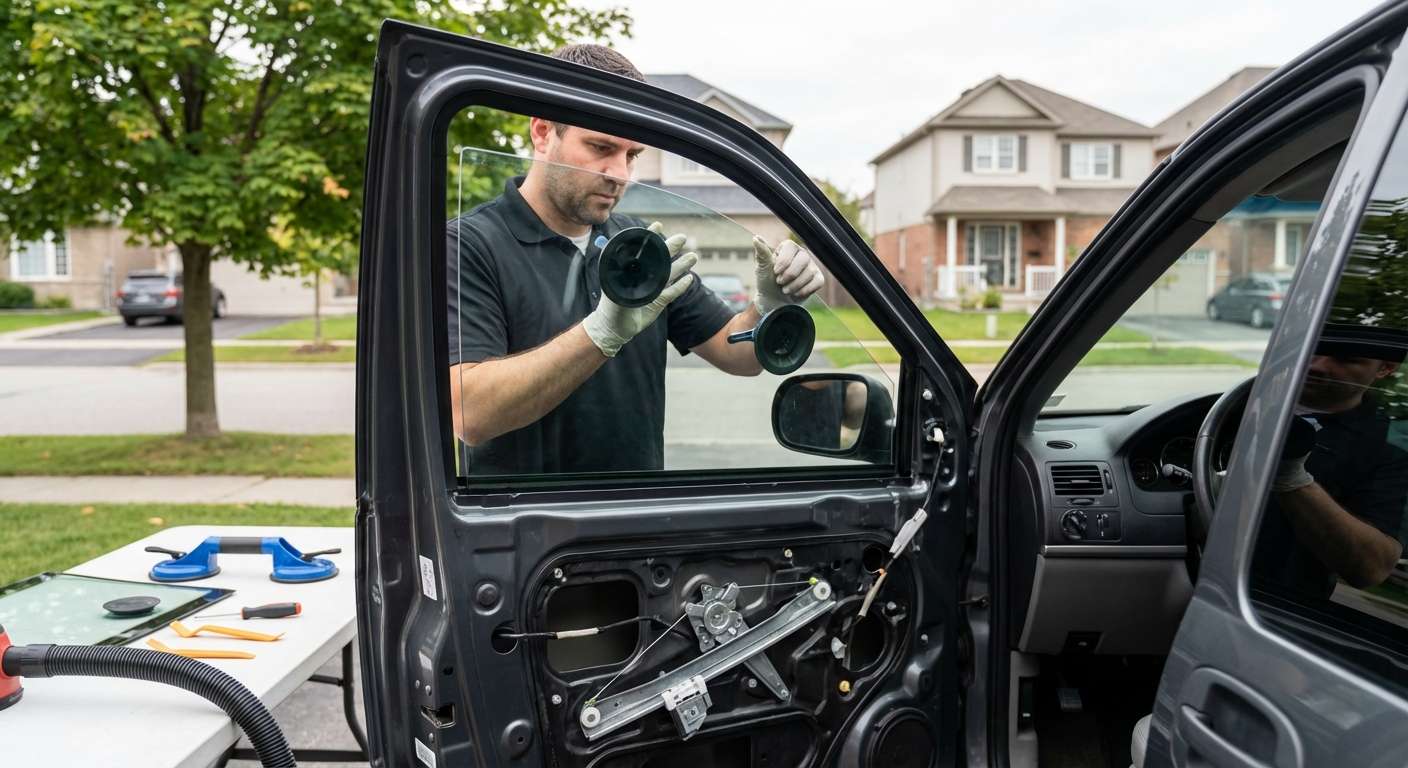
When replacing broken front door glass on this minivan, the replacement pane must match the exact factory green tint designated under NAGS part numbers DD10714 for the front passenger side and DD10715 for the driver side. Even though higher trim levels of this vehicle occasionally received acoustic laminated windshields, every front door drop glass installed across the lineup is single-pane tempered safety glass with built-in solar protection. Because this glass profile is shared identically across the entire GM Crossover Sport Van family—including the Buick Terraza, Saturn Relay, and Pontiac Montana SV6—the glass curvature must be checked carefully against the vertical run channels to prevent binding. Before the pane is lowered into the door shell, I inspect the bottom edge to confirm the pre-bonded sash attachment clips match the exact spacing of the horizontal regulator carriage.
The bottom sash clips are the most critical inspection point before any installation proceeds. On these vans, the original plastic regulator slider clips frequently become brittle and crack from years of door slams and temperature swings, which allows the glass to slip out of alignment or drop entirely into the bottom of the door cavity. I compare the new aftermarket glass brackets to the mounting points on the lift mechanism to guarantee the fasteners will bite squarely without putting torsional stress on the tempered pane. A misaligned clip will cause the window to pitch forward into the A-pillar run channel during travel, leading to chipped glass edges or premature regulator motor burnout.
Inspecting Window Run Channels and Internal Hardware
Once the interior door trim panel, mirror sail cover, and lower moisture barrier are removed, the full-frame upper door structure requires a thorough cleaning. Road grit and shattered glass fragments consistently pack into the black rubber window run channels that travel down the A-pillar and along the vertical B-pillar guide track. If these rubber channels contain stray glass granules, the new window will bind or scratch the moment it moves. I clear the inner and outer horizontal beltline weatherstrips completely before feeding the new pane through the door slot. Because I operate entirely on a mobile basis across Toronto and the GTA, I handle these cleanouts and hardware checks directly in your driveway or workplace parking space.
The motorized cable-driven regulator assembly inside the door cavity demands a close mechanical check while the glass is being seated. These cable systems often suffer from frayed metal strands, deteriorated plastic pulleys, or worn motor brushes that mimic a misaligned window. I operate the lift mechanism empty first to ensure the carriage travels smoothly up and down the guide rails without metal-on-metal grinding or cable slack. If the master window switch on the driver armrest feels spongy or shows intermittent electrical connection, that resistance must be isolated so it is not mistaken for physical drag on the new window pane.
Verifying Glass Travel and Weatherstrip Seal
After securing the glass sash clips to the regulator carriage, post-installation testing focuses on vertical travel and sealing against the upper frame. The door window must glide upward into the top rubber channel without hesitation, centering itself firmly into the upper door header without kicking sideways. The inner and outer beltline sweeps must maintain continuous, uniform tension against both faces of the glass from the front mirror triangle all the way back to the division post. If the glass pinches at the top or leaves an air gap near the side mirror sail panel, the regulator mounting bolts must be loosened slightly to adjust the glass pitch within the run channels.
The final operational check involves running the glass through several full cycles using the power window switch. The motor should exhibit a steady pitch without slowing down as the glass enters the upper rubber seal. Because this door uses an integrated full-frame steel surround rather than a frameless setup, the glass relies entirely on the perimeter rubber to keep out wind noise at highway speeds. Ensuring the pane sits deep within the upper channel prevents cabin drafts and stops water from trickling past the interior vapor barrier during heavy rain.


