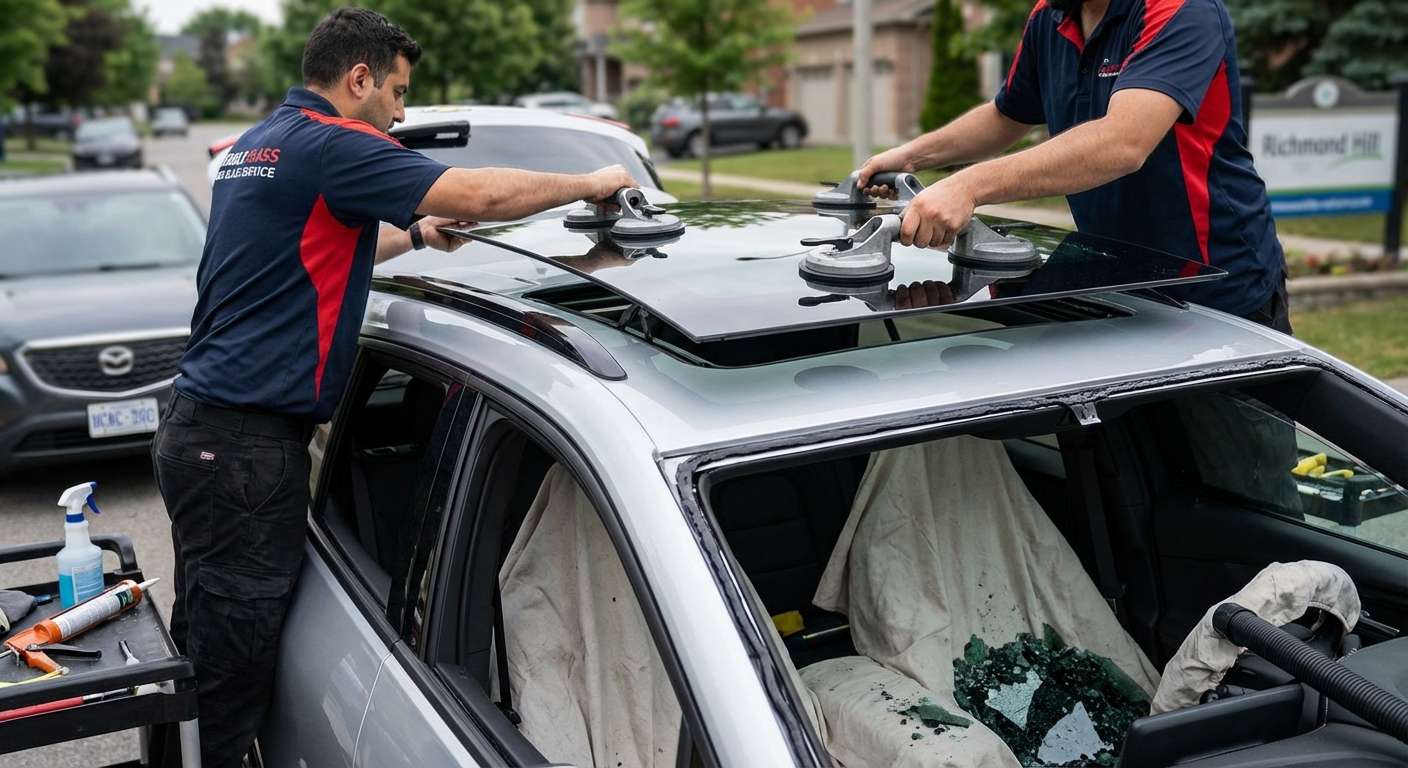
The C3U Dual-Pane Panoramic Glass Setup
On the Equinox EV, the panoramic roof comes equipped under GM Regular Production Option (RPO) code C3U. It is not a single slab of glass running the length of the vehicle. Instead, GM split the roof into two distinct sections: an active tilt-and-slide front glass panel and a fixed, stationary rear glass pane that stays anchored over the back row. Both panes are fabricated from deep-tinted, heat-absorbing tempered safety glass designed to cut down on cabin heat soak and filter harsh UV exposure. Neither pane carries embedded accessories like defroster grids, integrated radio antennas, or forward-facing camera brackets, leaving the glass surfaces completely clear.
Replacing broken glass on this electric platform requires knowing how the panels interact with the surrounding hardware. The panels seat flush against the exterior painted steel roof, sealed by heavy perimeter encapsulation rubber. Directly beneath the glass sits an aluminum and composite frame assembly that incorporates the structural track mechanism, alongside a motorized full-length fabric sunshade that travels front-to-back under both panes. When I source replacement panels for this setup, I supply aftermarket glass manufactured by established glassmakers like Pilkington, FYG, PGW, or XYG to match the original factory tint depth and edge profiles.
Mechanical Alignment, Water Management, and Motor Resetting
The electric platform changes how roof glass behaves, particularly because an EV cabin has virtually no engine drone to mask wind defects. Even a fraction of a millimeter difference in panel height between the movable front glass and the rear fixed pane causes highway howling or wind whistle right above the driver's head. The forward pane must sit slightly lower than the leading roof edge to prevent wind capture, while the trailing edge of the front pane must sit marginally higher than the stationary rear glass.
Water intrusion is another area that demands scrutiny during a glass swap. The structural frame features integrated water collection troughs paired with four separate drainage hoses. Two lines run down through the A-pillars, and two run through the C-pillars, emptying behind the wheel wells. If a drain line was pinched behind the headliner during interior trim handling, water backs up into the cabin.
Once fresh glass is bolted to the side lift mechanisms, the drive motor often loses its position memory. The Equinox EV pinch-protection safety sensors will trigger, causing the glass to stop halfway and reverse instead of closing flush. Clearing this condition requires completing the manual motor relearn procedure using the overhead console switches, holding the toggle through full travel to register the mechanical stop boundaries and restore smooth one-touch operation.
Post-Replacement Inspection Checklist
- Verify that the exterior rubber encapsulation seal sits entirely flat against the painted steel roof line without bunching or curled lips at the corners.
- Check the vertical step between the front movable glass and the rear stationary glass; the leading edge of the rear panel should sit slightly lower than the back edge of the front panel to stop high-speed buffeting.
- Test the full travel of the electric fabric sunshade from the overhead console switches to ensure the fabric glides straight without binding in its side channels.
- Operate the forward panel through both its vent-tilt and full-slide positions to confirm the motor does not false-trigger the pinch protection or reverse unexpectedly.
- Inspect the one-piece molded headliner and side curtain airbag pillar plastics to confirm all interior trim anchors are fully seated and free of moisture.


