Distinguishing Between Coupe and Convertible Rear Windows
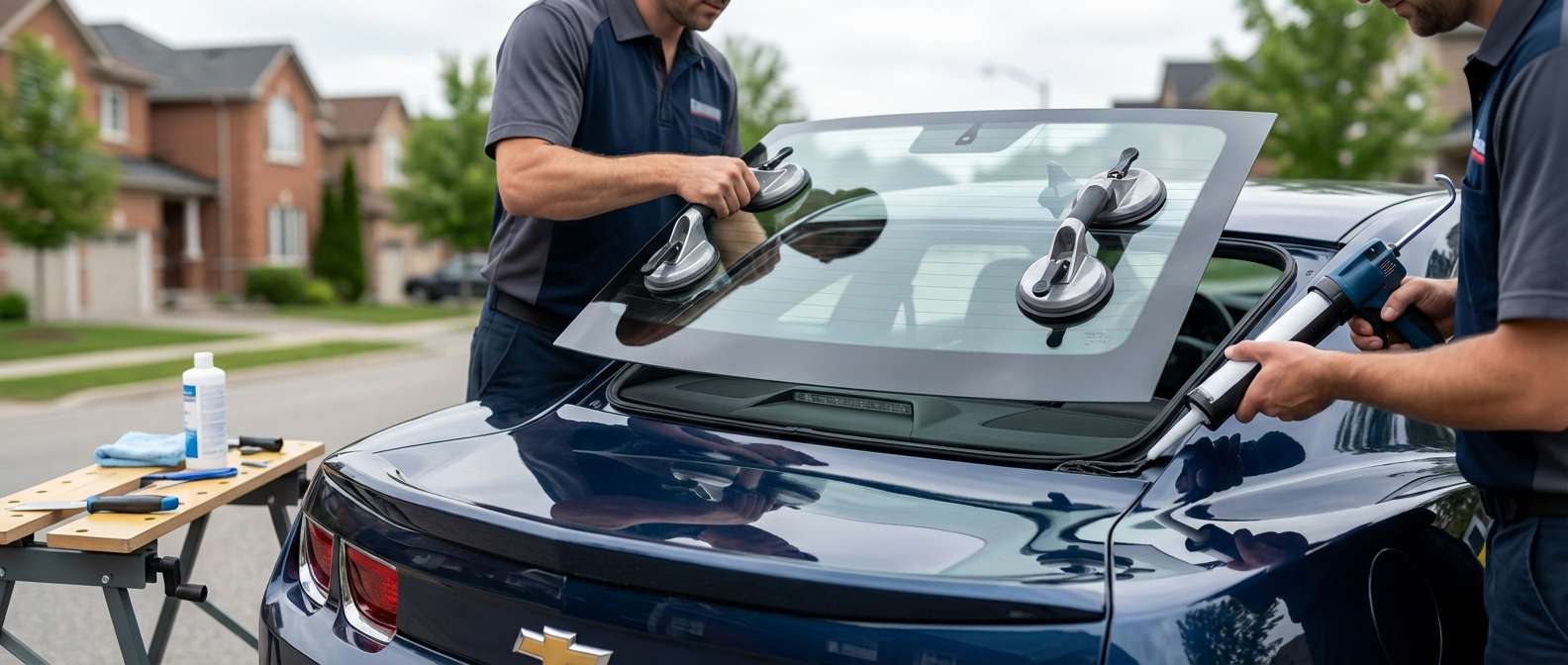
Identifying the exact rear window setup on your vehicle comes down immediately to the body style, because General Motors engineered two entirely different rear glass designs for this run. If you drive a coupe—whether it is an LS, LT, SS, or the supercharged ZL1—your vehicle uses a rigid, stationary back glass set flush between the roofline and the rear quarter panels. Convertible models, introduced for 2011, feature a heated glass pane that is chemically bonded straight into the fabric folding roof. While the coupe glass is a direct-glazed stationary part serviced on its own under GM part number 22840625, the convertible rear window is not sold by dealerships as an independent glass panel; damage or corner delamination on a ragtop typically requires a complete canvas roof assembly or specialized upholstery re-bonding.
Looking closely at the embedded grid lines reveals another major difference between the two configurations. Coupe back glass incorporates both the heated defroster lines and an integrated AM/FM radio antenna grid running through the upper portion of the glass, which avoids an external mast antenna on the body. Convertible rear windows still contain the heating grid elements for winter defrosting, but the AM/FM antenna was relocated out of the folding glass and built into the decklid and rear spoiler assembly instead. Coupe glass also carries a factory solar-absorbing green tint and sits directly above the interior parcel shelf, whereas the convertible utilizes separate power rear quarter windows that drop into the body ahead of the folding back window.
Coupe Package Tray Access and Integrated Electronics
The interior architecture beneath the coupe rear glass demands extra attention because several critical electronic components sit directly flush with the lower pinchweld. Positioned in the center of the molded interior package tray, directly beneath the steep rake of the back glass, sits the Center High-Mounted Stop Lamp. To clear the working area without damaging the interior, the molded rear deck trim and the broad C-pillar interior trims must be carefully unclipped. Whenever I replace this rear glass, I source aftermarket units produced by major manufacturers like Pilkington, PGW, XYG, and FYG to match the original solar-absorbing tint and exact defroster grid layouts.
The earlier factory part numbers for the coupe rear glass—including 20939885, 22744658, 92221719, 92243113, and 92244877—all consolidated into GM part number 22840625. Across all of these revisions, the glass remains completely devoid of exterior hardware like rear wipers, washer nozzles, or camera brackets. It relies entirely on a clean, flush perimeter set into the body without wide metal clip-on reveal mouldings, sealing cleanly along the trailing edge of the roof and GM's massive single-stamped steel quarter panels.
Common Grid Failures and Grid Wire Vulnerabilities
A frequent failure on these coupes involves the soldered electrical spade connectors that supply power to the heating grid. These terminal tabs sit tight against the outer edges of the glass beneath the C-pillar sail panels, and excessive vibration or aggressive interior cleaning can snap the solder joint entirely off the printed busbar. Once that tab pulls away from the glass surface, the entire defroster circuit breaks, leaving the heavy fastback glass unable to clear frost or condensation on cold mornings.
The in-glass AM/FM antenna and defroster traces are surface-printed onto the interior face of the glass rather than laminated between two sheets of glass. If a vehicle has had dark aftermarket window tint applied, any subsequent attempt to scrape off purpled or bubbled film using razor blades will slice through the microscopic silver-ceramic lines. Slicing these traces permanently ruins AM/FM radio reception and cuts individual defroster paths, leaving physical replacement of the entire back window as the only reliable fix to restore both heating and clear radio reception.


