Coupe Fixed Glass Versus Volante Soft-Top Separation
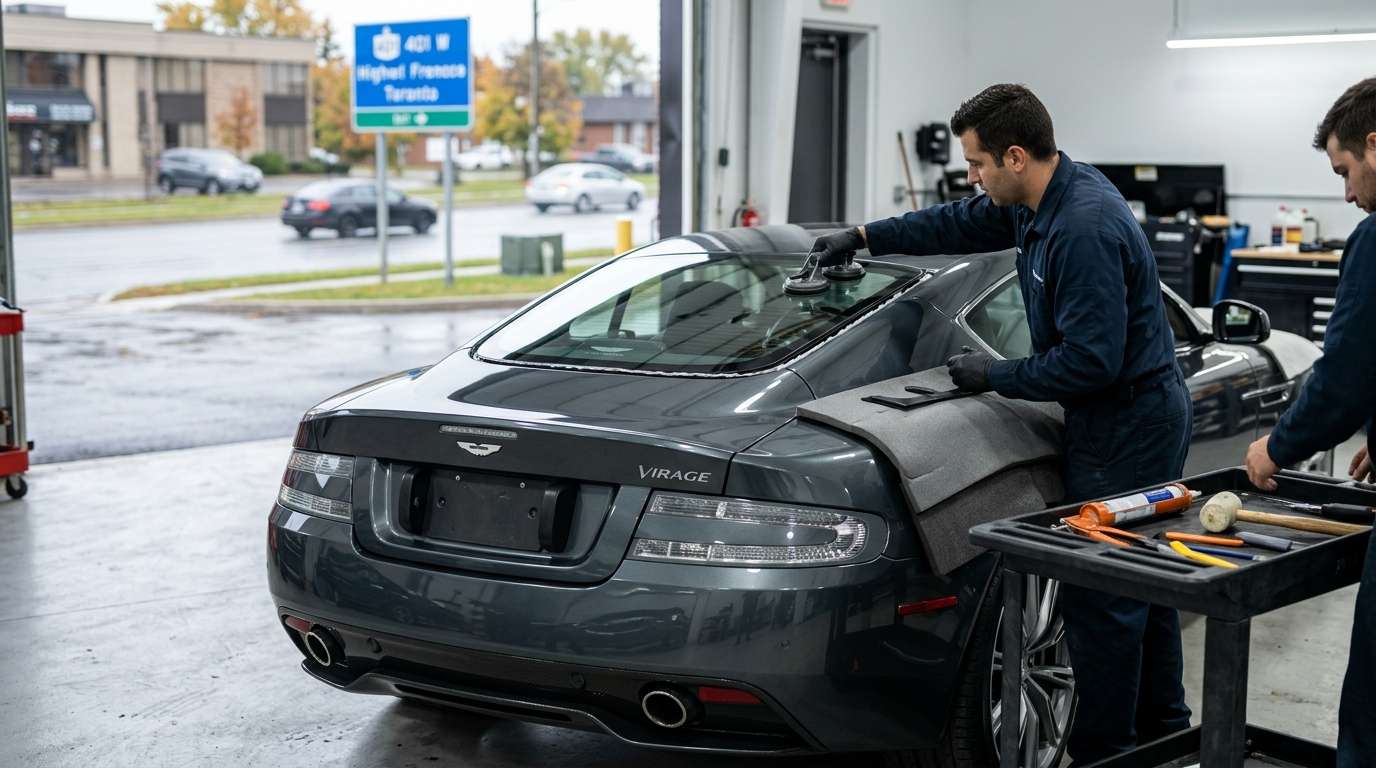
Identifying which rear window setup your Virage uses comes down entirely to whether you drive the Coupe or the Volante convertible, as the structural designs do not interchange. On the hardtop Coupe, the rear window is a large, direct-glazed structural panel bonded straight to the aluminum body aperture. If you look at the lower corners of the Coupe glass from inside the cabin, you will see direct soldered electrical terminal tags leading into the defroster grid, bordered by a wide ceramic frit band that hides the body flange underneath. The convertible Volante, by contrast, uses a heated glass window that is bonded directly into the multi-layer fabric roof rather than set into the body frame, meaning an edge failure on a convertible usually involves fabric-to-glass delamination rather than urethane pinchweld failure.
VH Architecture Shared Glass and Defroster Grid Details
The rear windscreen on the Coupe carries Aston Martin factory part number 4G43-76-10573, which cross-references within the auto glass catalog system under NAGS number FB22442. Because the Virage bridges the gap between the DB9 and the DBS V12, it utilizes the exact same rear window dimensions and perimeter curvature found on those sibling VH coupes. The glass itself is tempered safety glass featuring a continuous horizontal defroster element fired into the inner face. Unlike many modern grand tourers, you will not find a rear wiper hole, washer nozzle, or reverse camera bracket drilled through or glued to this back glass; even the high-mount third brake light is built into the rear trunk lid bodywork rather than hung from the glass pane.
One specific concern on the Coupe is sudden glass breakage triggered by the defroster terminals. The electrical solder tags at the edges of the heating grid can create localized hot spots on the tempered sheet under high resistance, which is why Aston Martin originally modified the Climate Control Module software across the VH platform to step down the current load and prevent thermal fracture. When I install an aftermarket replacement back glass on your Coupe, your glass itself is covered for one year against manufacturing defects while my installation labor is protected for as long as you own the car.
Post-Replacement Inspection Checklist
Once the back glass replacement is complete on your vehicle, take a few minutes to check these Virage-specific points before taking the car on the road:
- Examine the outer black ceramic frit perimeter to ensure the urethane line is completely hidden from view and the glass sits flush with the adjacent aluminum rear quarter panels and roof trailing edge.
- Inspect the lower corners inside the rear parcel shelf area to confirm the defroster spade terminals are cleanly connected without mechanical tension pulling on the solder tags.
- Switch on the rear demister button on the center console stack to verify current flows evenly across all grid lines without dead zones or abnormal electrical hum.
- Ensure the interior C-pillar trim panels and the rear parcel shelf leather surround were reseated flat against the interior perimeter without gaps or pinched harness wires.
- Verify the trunk lid opens and closes without the forward edge of the decklid making contact with the lower edge of the newly positioned rear glass.


