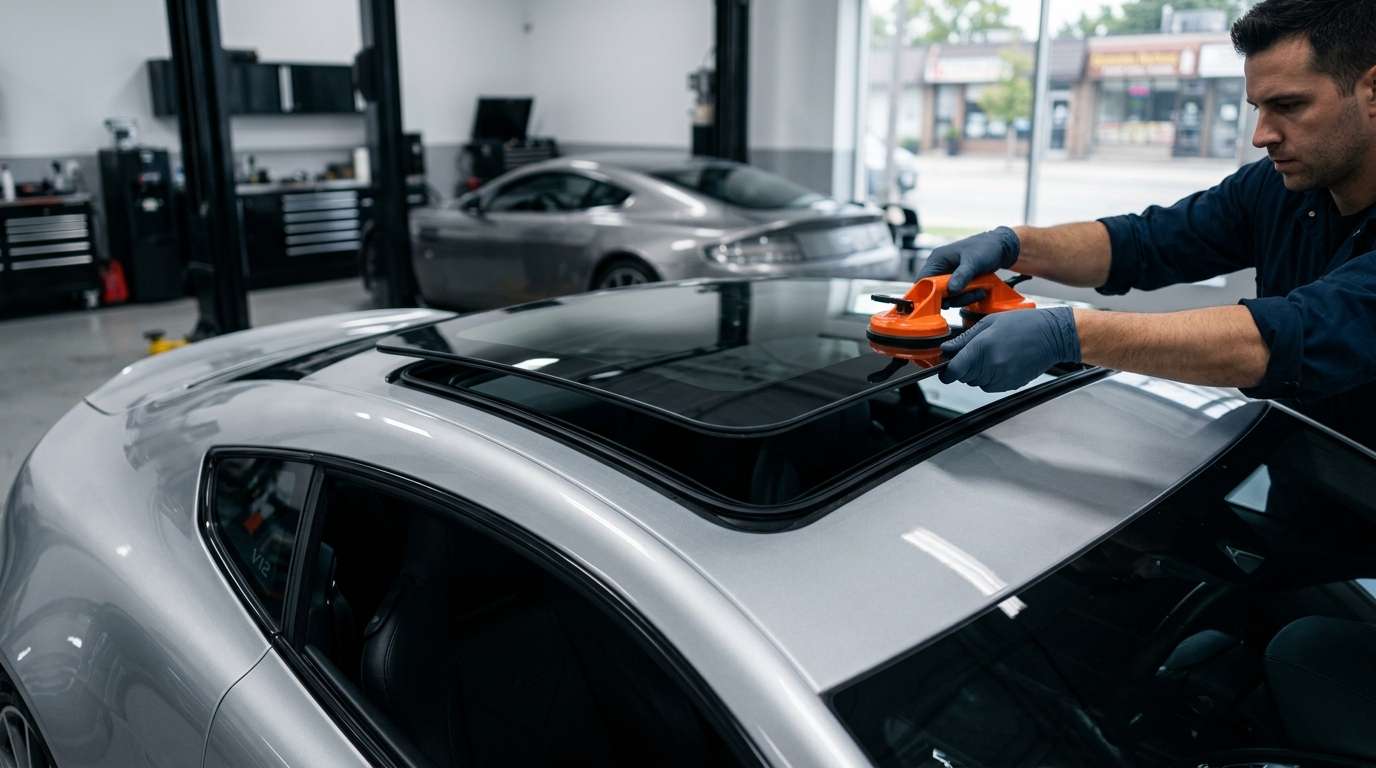
Factory Roof Options vs. Non-Existent Overhead Glass
Aston Martin never built an overhead glass option for this car, meaning an authentic factory replacement glass panel simply does not exist anywhere in the parts catalog. If you are looking at cracked glass directly above the driver and passenger seats, you are looking at an aftermarket modification. Aston Martin constructed the fixed-roof coupe with either a solid painted aluminium skin or an exposed lightweight carbon-fibre weave panel. When Gaydon introduced an open-sky driving option, it arrived solely as the V12 Vantage Roadster with an electronically folded fabric soft top and a bonded rear window glass. There is no factory glass cartridge, no sliding blind mechanism, and no solar-coated panoramic roof glass listed under any National Auto Glass Specifications standard or Gaydon parts book.
Chassis Architecture and Lack of Overhead Drainage
The car relies on an extruded, cold-cured epoxy-bonded aluminium VH platform. Because Aston Martin never crash-tested or engineered this bonded architecture to carry a glazed roof opening, there is no factory allowance for a cutout above the cabin. The interior design reinforces this layout: whether finished in stitched Alcantara or full-grain leather, the headliner mounts directly against the solid overhead skin without any structural pocket, drainage channel, or motor cassette. When I work on British sports cars requiring panel replacements, my shop installs quality aftermarket glass sourced from leading names such as XYG, Pilkington, PGW, or FYG, but even through these comprehensive aftermarket channels, no direct-fit replacement sunroof panel exists for this application. Any glass retrofitted into the metal skin lacks the recessed A-pillar and C-pillar water drain routing that factory-engineered glass roofs require.
Managing Custom Retrofits and Windshield Integration
Whenever an aftermarket cutout has been introduced to the aluminium roof, dealing with the glass involves tracking down universal bespoke components rather than matching an original build sheet. Unlike the factory front glass—which carries dedicated mounting brackets for the rain and light sensor assembly alongside side pillar seals—an aftermarket roof pane operates completely isolated from the vehicle harness. Replacing a damaged aftermarket glass panel on this coupe demands measuring the custom metal aperture manually, evaluating the remaining frame profile, and sealing the surround against chassis flex without relying on non-existent factory replacement clips or bespoke perimeter mouldings.


