Toronto & GTA · Auto glass
Used auto parts in Canada: what's worth buying used, and what isn't
We replace glass in driveways and parking lots across the GTA, so we see a lot of cars mid-repair. The question we get more than any other has nothing to do with glass: “where do I find a used mirror, a used fender, a used door for this thing without paying dealer money?”
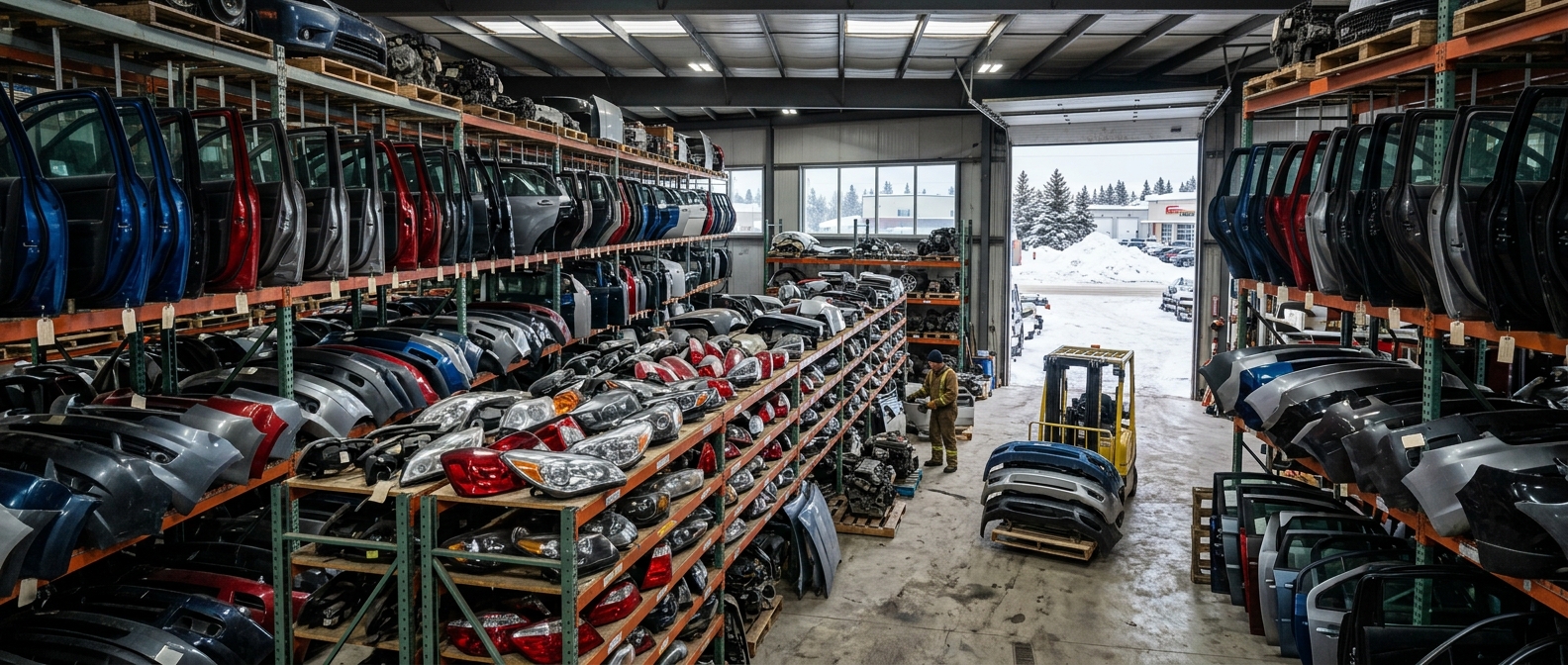
Here's the honest version of the answer, including the part most shops won't tell you: there are parts you should absolutely buy used, and there are parts we won't install used no matter how good the price is.
Why used OEM makes sense in Ontario
Ontario is hard on cars. Salt eats rocker panels, gravel trucks on the 401 and the QEW take out mirrors and windshields, and every spring somebody backs into a curb they swear wasn't there in the fall. Meanwhile a new mirror assembly from the dealer for a five-year-old crossover can run four hundred dollars before HST, and the shop needs a week to get it in.
A recycled original part solves both problems. It came off a real vehicle of the same make and model, so it fits without shimming, the plastics are the same grade, and on body panels it often comes already in your colour code. On a car that's eight or ten years old, spending dealer money on a cosmetic part rarely makes sense — especially if the vehicle is close to the point where an insurer would call it a write-off anyway.
There's also the boring practical reason: some parts simply aren't made anymore. Once a model is out of production, the dealer network dries up long before the cars leave the road. Salvage inventory is where those parts live.
What we tell people to buy used
Body and exterior parts are the easiest win, and they're the ones customers actually shop for. Fenders, doors, hoods, trunk lids, bumper covers, mirrors, grilles, door handles, wheel wells, roof rails. These are the categories where used parts save the most money, because the dealer price is high, the fit is exact, and a part that survived on a donor vehicle will survive on yours.
- Body panels and doors. Colour-matched panels from the same paint code can save a full respray. Bring your colour code (driver's door jamb sticker) when you shop.
- Mirrors. Especially heated, folding or blind-spot mirrors — a used assembly is often a quarter of the dealer price.
- Lights. HID and LED headlight assemblies are brutally expensive new. Just check the lens for hazing and the mounting tabs for cracks.
- Interior trim. Door cards, pillar trims, consoles, sun visors, seat sections after a break-in.
- Wheels. A single curbed alloy is a classic used-parts purchase.
- Mechanical assemblies. Engines, transmissions, transfer cases and rack assemblies — as long as the seller gives you the donor's mileage and a warranty in writing.
What we don't install used — glass included
This is where we lose a bit of business by being straight with people. We don't put used windshields into customers' vehicles, and we tell them why.
Laminated glass ages. A used windshield has already lived through impacts you can't see. Micro-chips along the edge, invisible under dirt, become cracks the first cold morning you blast the defroster on Highway 7.
The bond matters more than the glass. A windshield is a structural part: it supports the roof in a rollover and it's the backstop the passenger airbag deploys against. That job depends on a clean urethane bond to an undamaged pinch weld and a factory-grade frit band. Removing a windshield without damaging it is not something anyone can promise.
Same logic applies to airbags, seatbelts and pretensioners, brake hardware, and anything with a safety recall attached to it. We also skip used ADAS cameras and radar units — if the calibration data is off, the lane-keeping system is guessing.
| Part | Used? | Why |
|---|---|---|
| Fenders, doors, hoods, bumper covers | Yes | Exact fit, often colour-matched, big savings |
| Mirrors, headlights, trim, wheels | Yes | Expensive new, easy to inspect before buying |
| Engines, transmissions, axles | Yes, with a warranty | Ask for donor mileage and return terms in writing |
| Windshields and laminated glass | No | Hidden edge damage, structural role, bond quality |
| Airbags, seatbelts, pretensioners | No | Single-use safety hardware; history unknown |
How to buy a used part without getting burned
Most bad used-part stories come down to buying the wrong number, not buying the wrong yard. Five things to have in hand before you pay:
- Your VIN. Two cars can look identical and take different parts depending on the build plant and trim. The VIN settles it.
- The OEM part number or interchange number. Interchange tells you which model years and trims share the same part — it's how recyclers list inventory, and it's how you avoid the “fits 2019 but not 2019 built after March” trap.
- Photos of the actual part. Not a stock photo. The real one, from a few angles, with the mounting points visible.
- The grade. Recyclers grade parts by condition and damage. Ask what the grade means in plain terms and what damage is on the part.
- The return window and warranty, in writing. A serious seller offers both. Anyone selling “as-is, no returns” on a $900 transmission is telling you something.
If you're shopping across the country rather than driving yard to yard, an online marketplace makes the interchange search a lot faster than phoning around. Searching for used auto parts in Canada by make, model and section beats calling six yards on a Saturday and getting three voicemails.
Buying from Canadian yards instead of shipping from the States
Cross-border shipping on a part is where savings quietly die. Duty, brokerage, exchange, and a fender that arrives creased at the corner because it travelled 900 kilometres in a bag. For anything large — panels, doors, hoods, glass-adjacent trim — buying inside Canada is usually the cheaper landed price even when the sticker looks higher.
Canadian recyclers are also easier to hold accountable. Returns are domestic, warranty claims don't involve a customs form, and for a lot of parts you can simply arrange local pickup. If you want to see how a Canada-first parts marketplace is set up and who's behind it, OEMRecycler lays out its policies plainly — 30-day return window, 30-day warranty, and yards listing their own inventory rather than a middleman flipping photos.
When the glass is part of the job
Break-ins are the common case: side glass smashed, door card damaged, mirror snapped off. The glass we handle the same day. The trim and mirror you can source used for a fraction of dealer cost — get the part on order first, and we'll time the glass so the door only comes apart once.
Collision work is the other one. If you're paying out of pocket to avoid a claim, used body panels plus a new windshield is almost always the cheapest honest repair. If the insurer is paying, ask whether they allow recycled OEM parts on your policy — many do, and on an older vehicle it can be the difference between a repair and a write-off.
Need the glass done while you sort out the rest?
We're mobile across Toronto and the GTA — we come to your driveway, your workplace, or your body shop. Quality PGW aftermarket glass, all-in pricing (glass, mouldings, urethane, labour), and a lifetime workmanship warranty on the installation itself. ADAS camera recalibration available with a printed report.
Call or text +1 (249) 209-1400Questions we get asked
Are used OEM parts safe?
For body, trim, lighting and mechanical assemblies, yes — they're the same parts the factory installed, just with mileage on them. The exceptions are single-use safety components: airbags, seatbelts, pretensioners, and laminated glass.
How much can I actually save?
On body and exterior parts, commonly 50 to 70 percent off dealer pricing, sometimes more on discontinued items. The bigger and more expensive the part new, the bigger the gap.
Can I buy a used windshield?
You can find them, but we won't install one. Edge chips you can't see, an unknown removal history, and the windshield's structural role in a rollover make it a bad trade for a few hundred dollars.
Will used parts affect my insurance claim?
Policies differ. Many Ontario insurers allow recycled OEM parts on older vehicles, and some prefer them because they keep a car repairable instead of writing it off. Ask your adjuster before the shop orders parts.
What's an interchange number?
It's the code recyclers use to say “this same part fits these model years and trims.” Give a yard your VIN and the interchange, and the guesswork disappears.